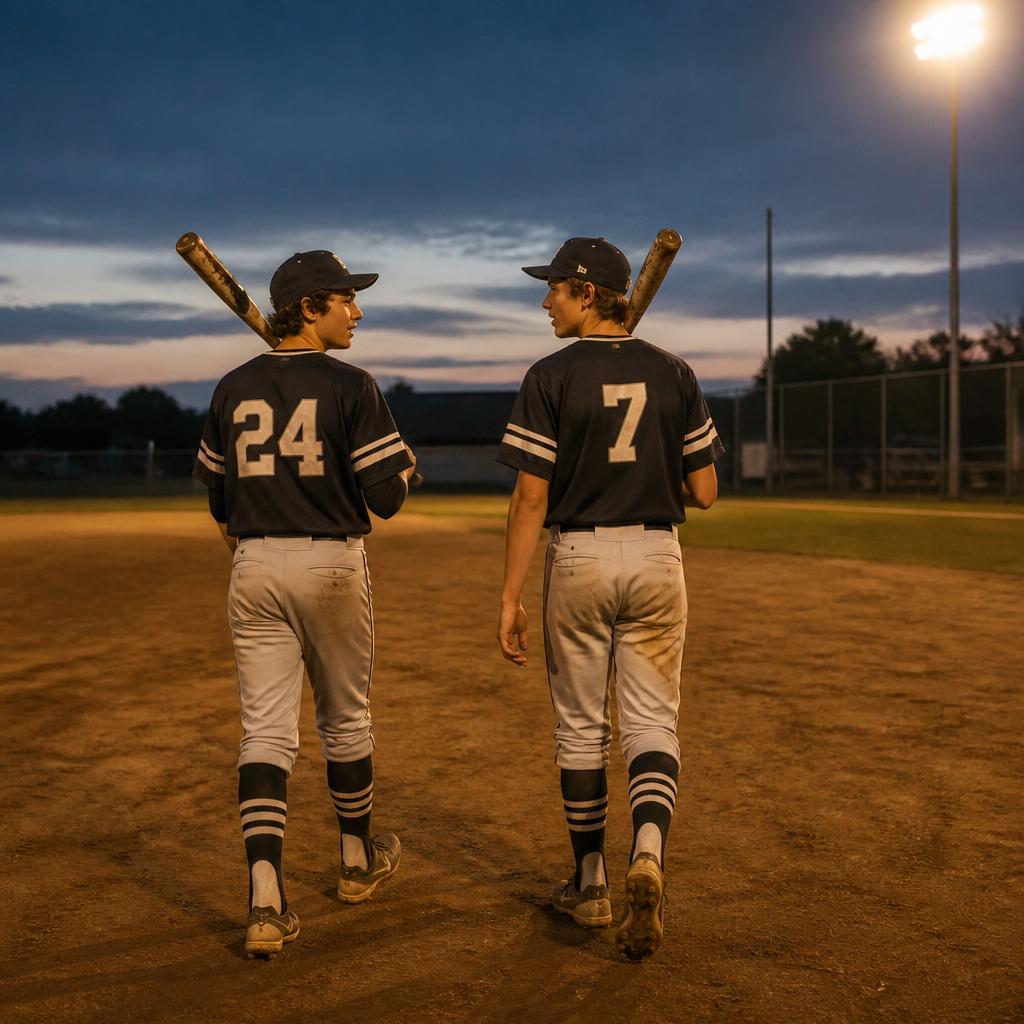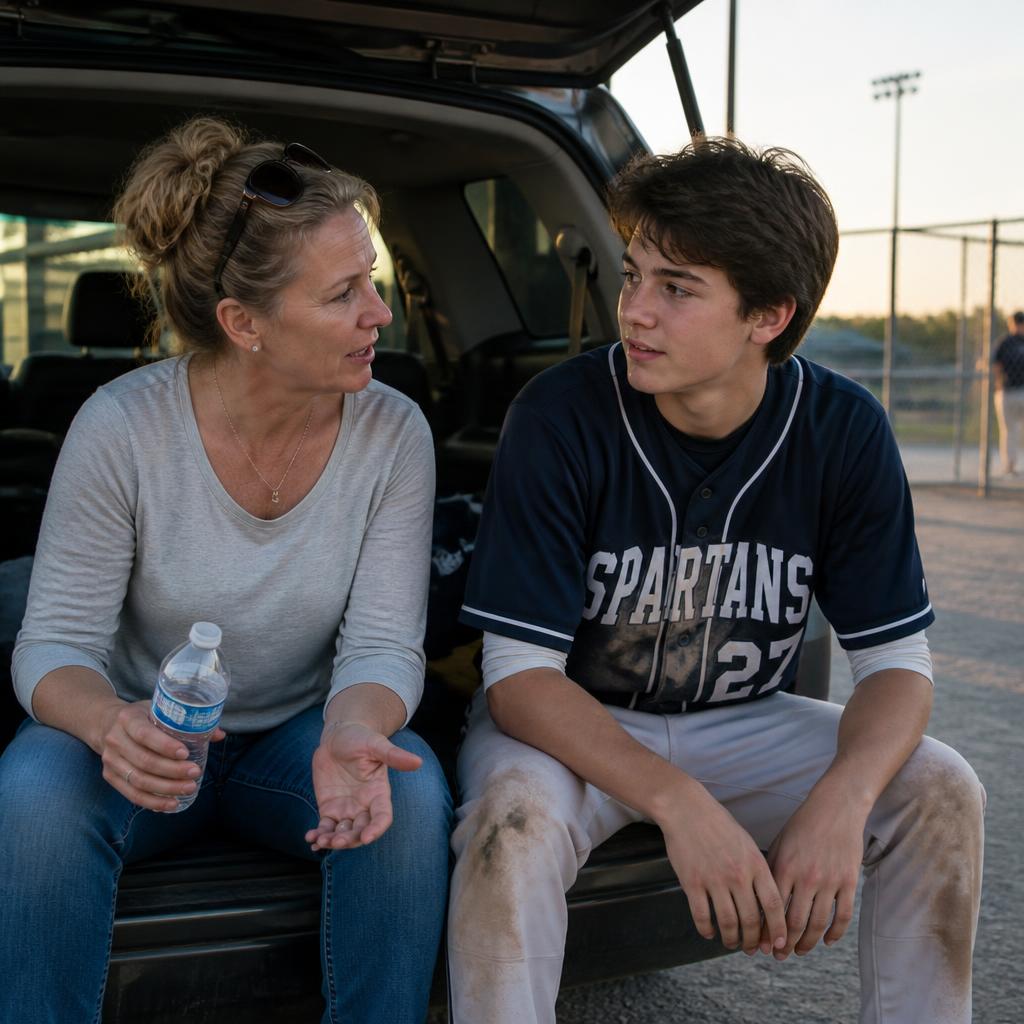
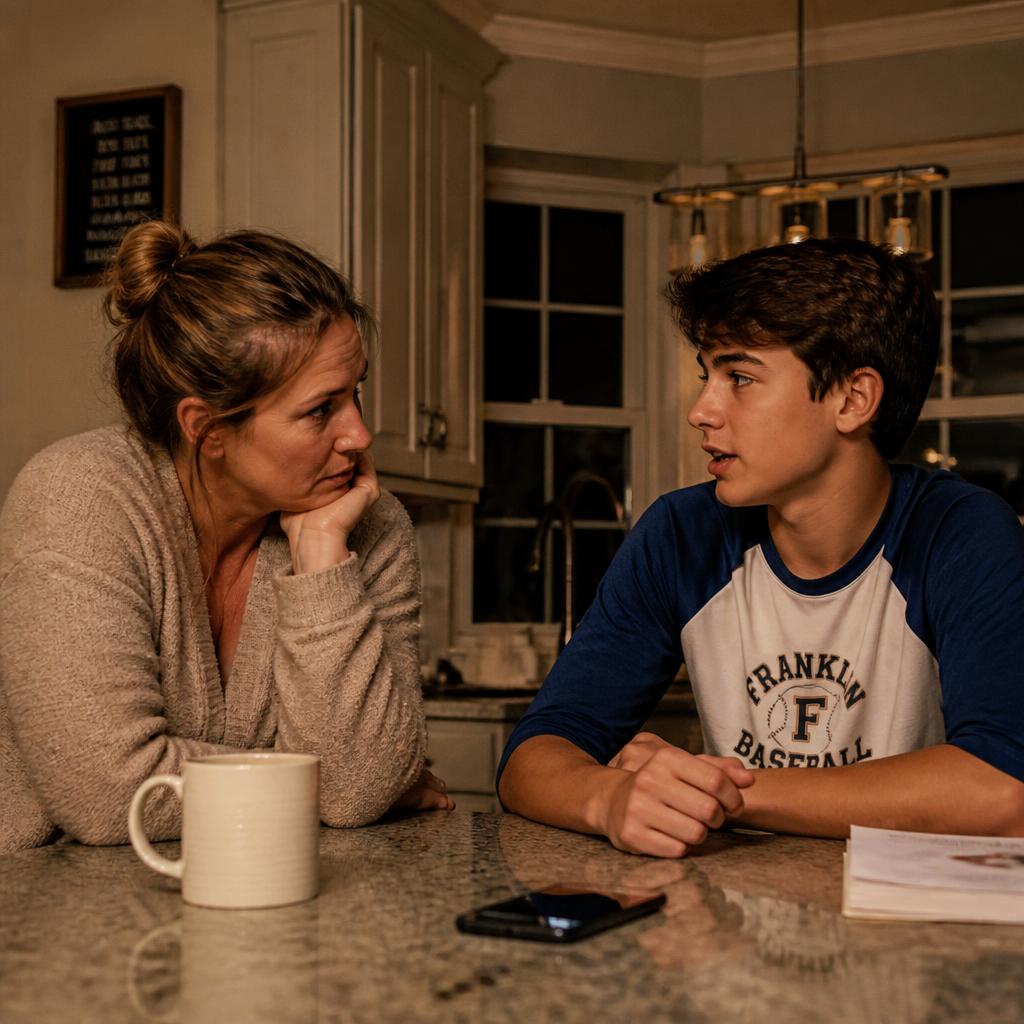
A thoughtful parent watching a youth baseball game

From Emily's Notes

The Loneliness of the "Quiet" Baseball Parent

Why finding your own community in the stands is just as important as the team on the field.

Emily Carter

Emily Carter

Baseball Parents Contributor

Family & Sideline Stories

Thoughtful stories for the moments around the game.

August 22, 202610 min read

Why finding your own community in the stands is just as important as the team on the field.

The sun is just beginning to dip behind the outfield fence, casting long, amber shadows across the infield dirt. From where you sit, three rows up on the far end of the bleachers, the world of youth baseball feels both intensely close and miles away. You can hear the rhythmic pop of the ball hitting the catcher’s mitt during warm-ups and the sharp, metallic ping of a bat connecting with a ball in the cages. But closer to home—right there in the stands—there is a different kind of noise. It is the roar of the "inner circle," the parents who have been together since T-ball, whose chairs are always clustered in the same prime spot behind home plate, and whose voices seem to carry a weight of authority that you haven’t quite figured out how to claim. You cheer when your child makes a play, and you wince when they strike out, but you do it mostly in a self-contained bubble. You are there, you are invested, but you are also, in a very specific way, alone.

The Invisible Sideline

There is a particular kind of isolation that comes with being a "quiet" baseball parent. In a culture that often equates volume with devotion, those who prefer to watch the game in silence can feel like they are failing some unwritten test of participation. We see the parents who are constantly on their feet, the ones who know every stat of every player on the roster, and the ones who aren't afraid to let the umpire know exactly what they think of a borderline strike call. For the parent who prefers to observe, to process the game internally, or to simply enjoy the afternoon without the performance of "sideline coaching," the bleachers can feel like a stage where you don't know the lines.

This isolation isn't just about a lack of conversation; it’s about a perceived lack of belonging. When the loud groups laugh at an inside joke or plan a post-game dinner that you only hear about in passing, the physical distance between your seat and theirs can feel like a canyon. You start to wonder if your quietness is being interpreted as coldness, or if your lack of "expert" commentary means you aren't as dedicated to your child’s success. It is the invisible sideline—a place where you are physically present but socially peripheral, watching two games at once: the one on the diamond and the one in the stands.

The Noise of the Bleachers

Youth sports have evolved into a high-stakes social ecosystem. It isn't just the kids who are performing; the parents are often under an immense amount of pressure to project a certain image. There is the "Committed Parent" who never misses a voluntary practice, the "Expert Parent" who has a critique for every swing, and the "Social Glue Parent" who manages the team snacks and the group chat with military precision. For many, this noise is a way to manage the anxiety that comes with watching their child navigate the ups and downs of a difficult game. If they are loud, they are helping. If they are involved in every drama, they are protecting.

However, for the parent who finds this noise exhausting, the bleachers can become a source of significant stress. The constant hum of comparison—whose kid is getting more reps, who is moving up in the batting order, who is looking at which travel teams for next season—creates an environment where vulnerability is rare. In this high-decibel environment, the quiet parent often retreats further into their shell. They aren't avoiding the team; they are avoiding the drama that so often hitches a ride on the back of competitive sports. But in doing so, they miss out on the very thing that makes the long weekends and the dusty drives worthwhile: the sense of shared journey.

Finding the Others

The shift often begins with a single, small observation. You are sitting in your usual spot, perhaps a bit removed from the main cluster of parents, when you notice someone else doing the same. They aren't on their phone, and they aren't yelling instructions. They are just watching, their eyes following the flight of a foul ball with a quiet intensity that mirrors your own. In that moment, the isolation begins to crack. You realize that you aren't the only one who finds the "bleacher noise" a bit much. You aren't the only one who is there primarily to witness their child’s growth, rather than to manage it.

Community in youth sports doesn't require a megaphone; it requires the willingness to be seen in the quiet moments between the innings.

Finding "the others" doesn't mean forming a rival clique. It means recognizing that there is a subset of parents who value the same things you do: a low-drama environment, a focus on the child’s experience over the scoreboard, and a quiet, steady form of support. It starts with a nod across the walkway or a brief comment about the weather that isn't a lead-in to a critique of the coaching staff. These small, low-stakes interactions are the building blocks of a different kind of sideline community—one that doesn't demand you change your personality to fit in.
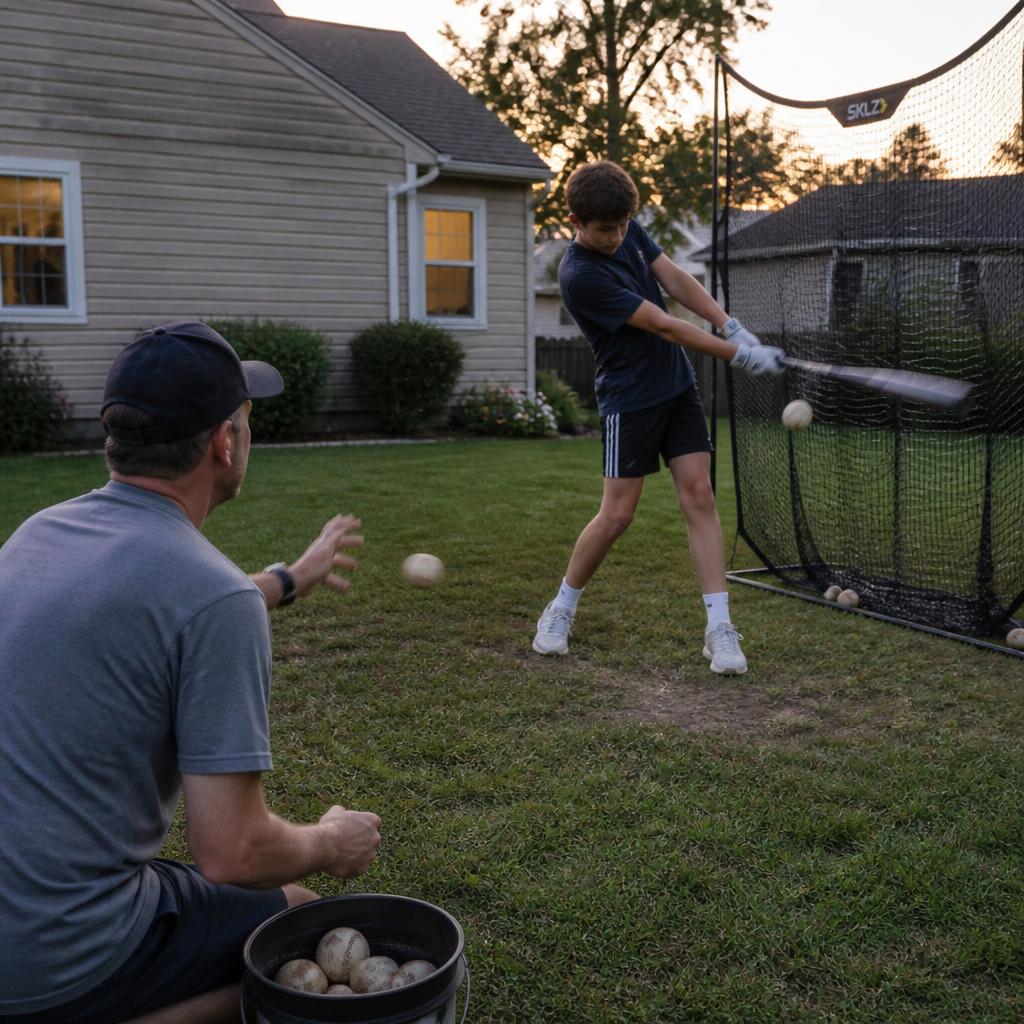

A parent holding coffee at sunrise near a baseball field

The Unspoken Language of Support

Support in the world of baseball is often measured in cheers and high-fives, but there is a deeper, quieter language of support that happens when parents find their own community. It’s the parent who quietly hands you a spare bottle of water when they see you’ve run out. It’s the one who catches your eye after your child makes an error and gives you a small, encouraging smile that says, I know how that feels, and it’s okay. This isn't the performative support of the loud group; it’s the grounded, empathetic support of people who understand the emotional toll of the game.

When you find your place among these parents, the game changes. You no longer feel the need to "perform" as a sports parent. You can talk about things other than baseball—about work, about other hobbies, or about the simple reality of raising a kid in a competitive world. This community acts as a buffer against the intensity of the season. It provides a space where you can be a human being first and a "baseball parent" second. This shift in perspective is often exactly what our children need to see. They need to know that their worth isn't tied to the game, and seeing their parents model healthy, low-drama relationships in the stands is a powerful way to send that message.

Breaking the Isolation

Breaking the cycle of isolation requires a subtle shift in mindset. It isn't about forcing yourself to be the loudest person in the stands or trying to wedge your way into an existing inner circle. Instead, it’s about reclaiming your right to be there on your own terms. It starts with the realization that your presence, even if quiet, is a vital part of the team’s ecosystem. You are the steady anchor, the one who provides a calm place for your child to land when the game gets chaotic.

A supportive parent community is the invisible infrastructure that allows a young athlete to take risks, knowing that their safety net is built on more than just winning.

Practical steps toward connection are often simpler than we imagine. It might be as small as arriving five minutes early to chat with the parent who is setting up the dugout water, or offering to help carry a bag for someone whose hands are full. These aren't grand gestures; they are invitations. By showing up as your authentic, quiet self, you give other quiet parents permission to do the same. You begin to build a culture where the focus is on the collective well-being of the kids, rather than the social standing of the adults.

The Power of the Low-Drama Circle

The most significant benefit of finding a supportive, low-drama parent community is the impact it has on the players. Children are incredibly sensitive to the energy in the stands. They can hear the tension in a parent’s voice, and they can feel the weight of the "bleacher drama" even if they aren't directly involved in it. When the parents are fractured, competitive, or isolated, the kids often mirror that behavior on the field. They become more anxious, more afraid of making mistakes, and less likely to support their teammates.

Conversely, a low-drama parent circle creates a "psychologically safe" environment for the kids. When they look into the stands and see a group of parents who are genuinely enjoying each other’s company—regardless of the score—it lowers their own stress levels. They feel free to play, to fail, and to learn. The quiet community becomes a shield against the toxic pressures that can so easily derail a young athlete’s love for the game. By finding your own place on the bleachers, you are indirectly helping your child find their own place on the field.

A Practice in Presence

At the heart of the quiet parent’s journey is the concept of presence. It is the ability to be fully in the moment, witnessing the game without the need to control it or the need to be validated by the crowd. This kind of presence is a skill, one that can be cultivated through a simple, repeatable practice. It’s a way of grounding yourself before the first pitch is even thrown, ensuring that you are bringing your best, most supportive self to the stands.

Consider a brief moment of reflection before you step out of the car and head toward the field. Take three deep breaths, focusing on the physical sensation of the air moving in and out. As you breathe, remind yourself of one simple truth: I am here to support my child, not to solve the game. This small practice creates a mental boundary between the stresses of the day and the experience of the ballpark. It allows you to enter the stands with a sense of calm and confidence that doesn't rely on the volume of your voice or the approval of the inner circle. When you are grounded in your own presence, you become a magnet for the kind of community you’ve been looking for. You find that the bleachers aren't so lonely after all, and that the quietest seats often have the best view of what truly matters.

About the Author

Emily Carter

Emily Carter

Baseball Parents Contributor

Family & Sideline Stories

Emily Carter is a Baseball Parents contributor whose reflective stories help families protect connection, perspective, and a child’s love for the game.

The Daily Confidence Routine Trusted by 75,000+ Baseball Families

Built from years of coaching experience and now trusted by more than 75,000 baseball and softball families.

Reader Offer

Your 40% Reader Discount Has Already Been Applied

As a Baseball Parents reader, your exclusive 40% reader offer has already been applied.

  • No coupon code is required.
  • Discount automatically applied at checkout.
  • Just 6 minutes a day — small enough to fit into any schedule, consistent enough to create real change
  • Daily confidence habits that shift how young players think under pressure — before, during, and after games
  • Practical language for parents — what to say (and what not to say) before, during, and after games
  • Built specifically for baseball & softball families — not generic sports psychology, but routines that fit the real rhythms of the game
Explore Bulletproof Hitter

✓ 40% Reader Discount Already Applied

75,000+

Families Served

4.9★

Average Rating

4,800+

5-Star Reviews

Continue Reading

Explore Baseball Parents

More stories, resources, and tools for baseball and softball families.

The Dugout Report — free weekly newsletter