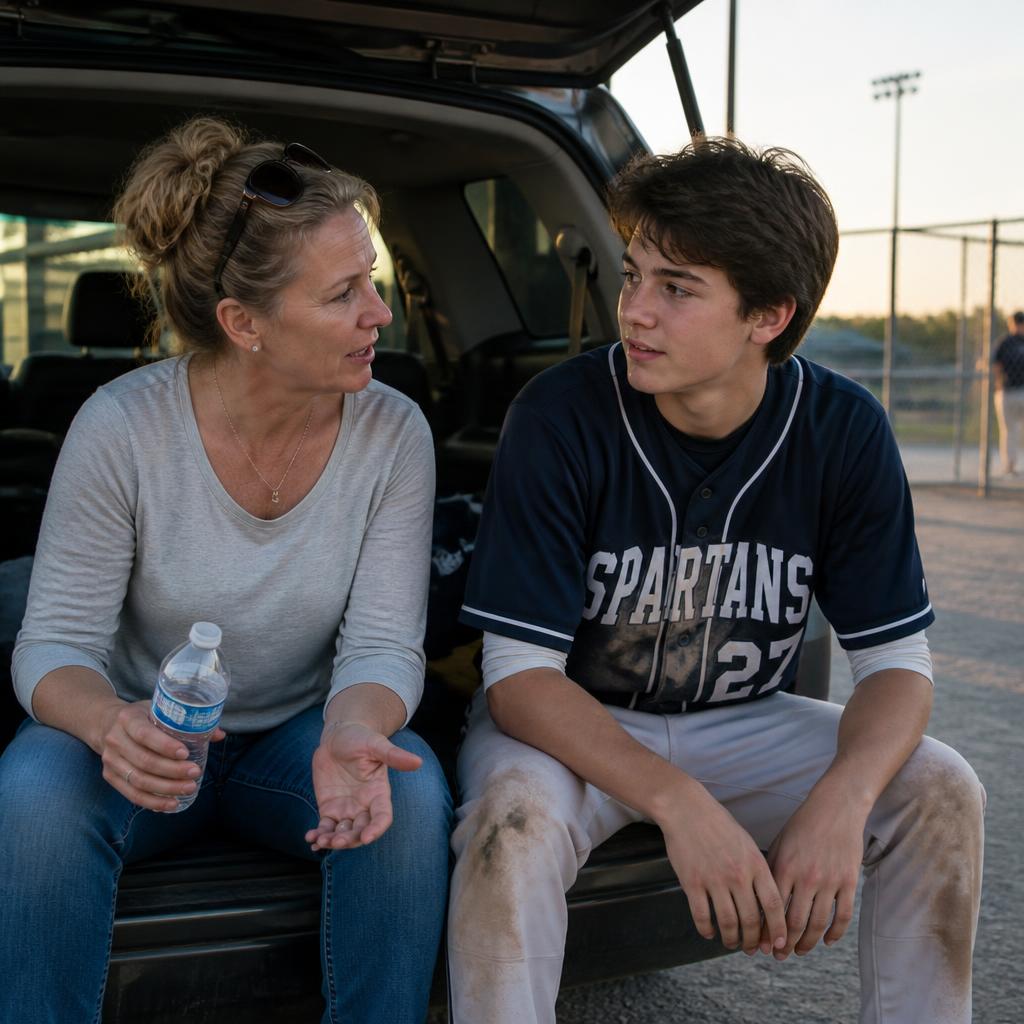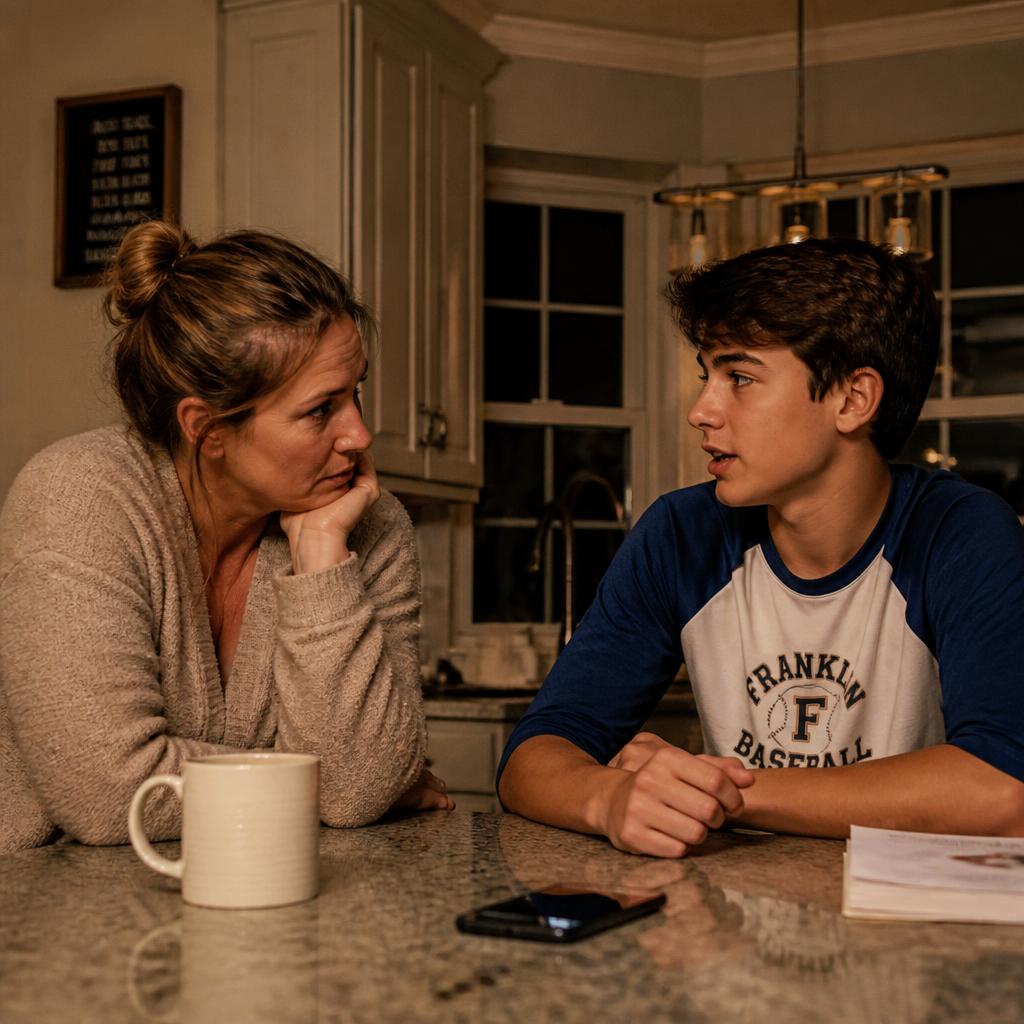
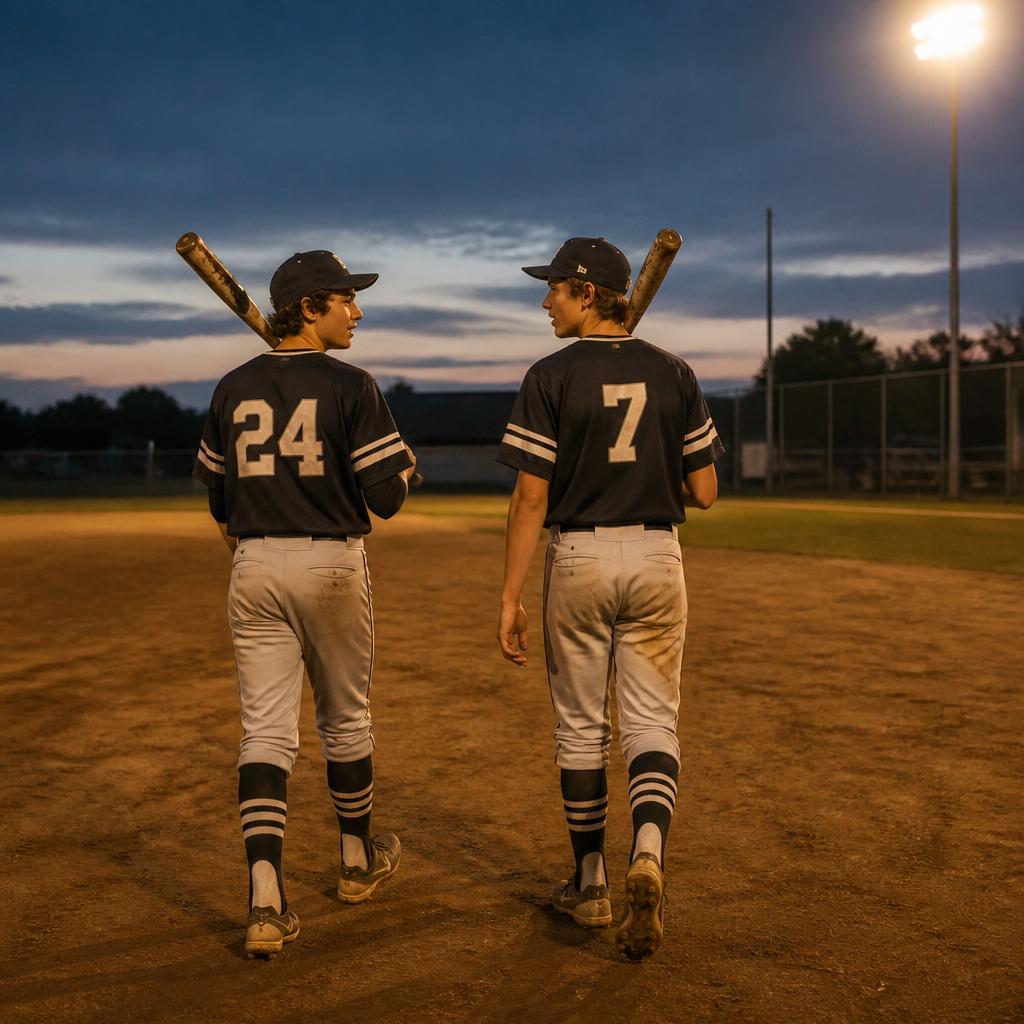
A youth player reflecting during a dusk car ride

From Emily's Notes

7 Things to Say in the Car When the Game Didn’t Go Their Way

How to protect their love for the game during the most important thirty minutes of the weekend.

Emily Carter

Emily Carter

Baseball Parents Contributor

Family & Sideline Stories

Thoughtful stories for the moments around the game.

August 22, 202610 min read

The sun is beginning to dip below the horizon, casting long, orange shadows across the gravel parking lot. You can hear the rhythmic crunch of cleats on stone, a sound that usually signals the end of a long day of competition. But today, the sound is heavy. Your son or daughter walks a few paces ahead of you, their gear bag slung over one shoulder, dragging slightly. The jersey that was crisp and white hours ago is now stained with the unmistakable rust-colored dust of the infield. They don’t look up as they reach the SUV. They simply climb into the backseat, pull their hat down low over their eyes, and click the seatbelt into place with a definitive, hollow snap.

The door closes, and suddenly, the world shrinks. It’s just the two of you, the hum of the air conditioning, and a silence so thick it feels like a third passenger. As a parent, your heart aches in that silence. You saw the strikeout in the final inning. You saw the ball hop over the glove at shortstop. You saw the tears they tried to blink away while shaking hands in the post-game line. Every instinct in your body is screaming at you to fix it, to provide the golden nugget of wisdom that will turn this heartbreak into a "teachable moment." You want to talk about elbow height or "having a short memory." You want to tell them it doesn’t matter, even though you know that to them, in this thirty-minute window, it feels like the only thing that matters.

This is the most critical half-hour of the weekend. It is the bridge between the high-pressure arena of the diamond and the safety of home. How we navigate these miles determines whether our children see the car as a mobile classroom where their failures are audited, or as a sanctuary where they are loved regardless of the box score. Shifting from "fix-it mode" to "safe harbor mode" isn't just about being nice; it’s about protecting their long-term relationship with the game. When the game doesn't go their way, the words we choose have the power to either cement their frustration or provide the oxygen they need to breathe again.

1. "I love to watch you play."

There is a profound simplicity in these six words, yet they are perhaps the most transformative sentence a sports parent can utter. In the immediate aftermath of a loss, a young athlete’s identity is often brittle. They feel that their value in your eyes is tied to the scoreboard. When we lead with technical critiques, we inadvertently confirm that fear. We signal that our primary interest is their production, not their presence.

By saying "I love to watch you play," you are decoupling their performance from your affection. You aren't commenting on the win, the loss, or the errors. You are simply stating that being a witness to their effort brings you joy. This isn't a participation trophy; it is a declaration of unconditional support. It tells them that whether they went four-for-four or zero-for-four, the highlight of your day was simply being there. This phrase acts as a psychological reset button, allowing the child to stop evaluating themselves through what they imagine is your critical lens.

2. "What do you want to eat?"

It sounds almost too mundane for a list of "important things to say," but the pivot to food is a strategic move in emotional regulation. After a tough game, a child is often stuck in a loop of negative visualization, replaying the missed fly ball or the called third strike. By asking about dinner or a post-game snack, you are gently pulling them out of the past and into the immediate present. You are reminding them that life exists outside the fences of the ballpark.

The car ride home isn't the second half of the game; it's the first half of the rest of their life, and they need to know that the world keeps spinning even when the scoreboard stops.

Choosing a meal is a low-stakes decision that restores a sense of agency. When a player feels they’ve failed on the field, they often feel a loss of control. Deciding between tacos or burgers is a small way to reclaim a bit of that autonomy. More importantly, it signals to the child that you are moving on. If the parent isn't dwelling on the loss, the child feels more permission to let go of it themselves. It transforms the atmosphere from a somber wake to a normal family evening.

3. "That looked like a hard game to be part of."

Empathy is often confused with pity, but in the post-game car ride, empathy is actually a form of validation. When we try to cheer a child up too quickly by saying "It wasn't that bad," we are essentially telling them that their current feelings are wrong. This can lead to a sense of isolation. They feel the weight of the moment, and they feel that you don't "get it."

By acknowledging that the game was hard, you are meeting them where they are. You are sitting in the mud with them instead of standing on the bank telling them to dry off. This validation creates a bridge of trust. You aren't agreeing that they are a "bad player," but you are agreeing that the situation was difficult. This simple acknowledgment often does more to dissipate anger and sadness than an hour of "positive thinking" ever could. It allows the child to feel heard, which is the first step toward moving past the disappointment.
A baseball glove resting inside a car after a game

4. "I'm here when you're ready to talk, but we don't have to talk now."

One of the biggest mistakes we make as parents is forcing the conversation before the "emotional dust" has settled. When we are in a state of high stress, our logical brain—the part that can actually process coaching—is essentially offline. Trying to have a productive discussion about a pitcher’s sequence or a base-running error in this state is like trying to teach someone to swim while they are in the middle of a panic attack.

Giving a child the "right of first refusal" on a conversation is the quickest way to build long-term trust. It shows that you respect their emotional boundaries as much as you respect their athletic effort.

By offering this "open-door policy," you are giving them the gift of space. You are letting them know that you are available as a sounding board, but you aren't going to force them to perform emotionally. Often, when the pressure to talk is removed, the child will eventually open up on their own. They might wait until you're halfway home, or until they're brushing their teeth before bed, but when the words come from them, they are ready to be processed.

5. "I noticed how you kept your head up after that inning."

If you must talk about the game, shift the focus from the results to the character traits that are within their control. Results in baseball are notoriously fickle; a line drive can be caught for an out, and a weak blooper can fall for a hit. If we only praise the hits, we are teaching our children to value luck as much as skill. However, character traits like resilience and focus are entirely within the player's power.

When you highlight a specific moment of grit—like how they cheered for a teammate after their own strikeout—you are reinforcing the "process" over the "product." You are telling them that you are looking at the things that actually make a great athlete in the long run. This helps build a more stable form of self-esteem that isn't dependent on the whims of the official scorer. It gives them something to be proud of, even when the final score is lopsided.

6. "What was one thing that felt good today?"

This is a subtle exercise in cognitive reframing. Even in the worst games, there is almost always a single moment of competence or connection. Maybe it was a good warm-up, a solid take on a 3-2 pitch, or a funny joke shared in the dugout. By asking them to find one positive thing, you aren't asking them to ignore the bad; you are simply asking them to acknowledge that the bad isn't the entire story.

This question shouldn't be asked with a "toxic positivity" vibe. It should be asked with genuine curiosity. It encourages the player to scan their memory for something other than their mistakes. Over time, this trains the brain to maintain a more balanced perspective on performance. It helps prevent the "all-or-nothing" thinking that leads many talented young athletes to burn out when the game gets difficult. It reminds them that the game is a collection of hundreds of small moments, not just one or two big errors.

7. "I'm proud of the person you're becoming through this."

Ultimately, youth sports are a laboratory for life. We don't sign our kids up for baseball just so they can hit home runs; we sign them up so they can learn how to handle failure, how to work with others, and how to persevere when things are hard. The car ride home is the perfect time to remind them of this "big picture" perspective.

When you tell a child you are proud of the person they are becoming, you are placing the game in its proper context. You are saying that the struggle they just went through on the field is actually fuel for their growth as a human being. This takes the sting out of the loss because it gives the loss a purpose. It’s no longer just a "humiliation"; it’s a training ground. This perspective is the ultimate safe harbor. It ensures that no matter what happens on the diamond, the child returns home knowing that their journey is meaningful and that their parent is their biggest fan—not of their stats, but of their soul.

As the car finally pulls into the driveway and the engine cuts out, the silence feels different than it did thirty minutes ago. It’s lighter now. The "fix-it" urgency has faded, replaced by a quiet, steady connection. Before they open the door to head inside, consider one small, repeatable practice that can anchor this new approach. Many families find success in a "reset breath"—a simple, shared three-second inhale and exhale before anyone steps out of the car. It’s a physical signal that the game is officially over and the evening has begun. This tiny ritual, combined with the intentional words spoken during the drive, helps both parent and player leave the frustrations of the field behind. It builds the internal confidence that no matter how the game went, they have the tools to handle the aftermath, ensuring that when next weekend rolls around, their love for the game is still fully intact.

About the Author

Emily Carter

Emily Carter

Baseball Parents Contributor

Family & Sideline Stories

Emily Carter is a Baseball Parents contributor whose reflective stories help families protect connection, perspective, and a child’s love for the game.

The Daily Confidence Routine Trusted by 75,000+ Baseball Families

Built from years of coaching experience and now trusted by more than 75,000 baseball and softball families.

Reader Offer

Your 40% Reader Discount Has Already Been Applied

As a Baseball Parents reader, your exclusive 40% reader offer has already been applied.

  • No coupon code is required.
  • Discount automatically applied at checkout.
  • Just 6 minutes a day — small enough to fit into any schedule, consistent enough to create real change
  • Daily confidence habits that shift how young players think under pressure — before, during, and after games
  • Practical language for parents — what to say (and what not to say) before, during, and after games
  • Built specifically for baseball & softball families — not generic sports psychology, but routines that fit the real rhythms of the game
Explore Bulletproof Hitter

✓ 40% Reader Discount Already Applied

75,000+

Families Served

4.9★

Average Rating

4,800+

5-Star Reviews

Continue Reading

Explore Baseball Parents

More stories, resources, and tools for baseball and softball families.

The Dugout Report — free weekly newsletter