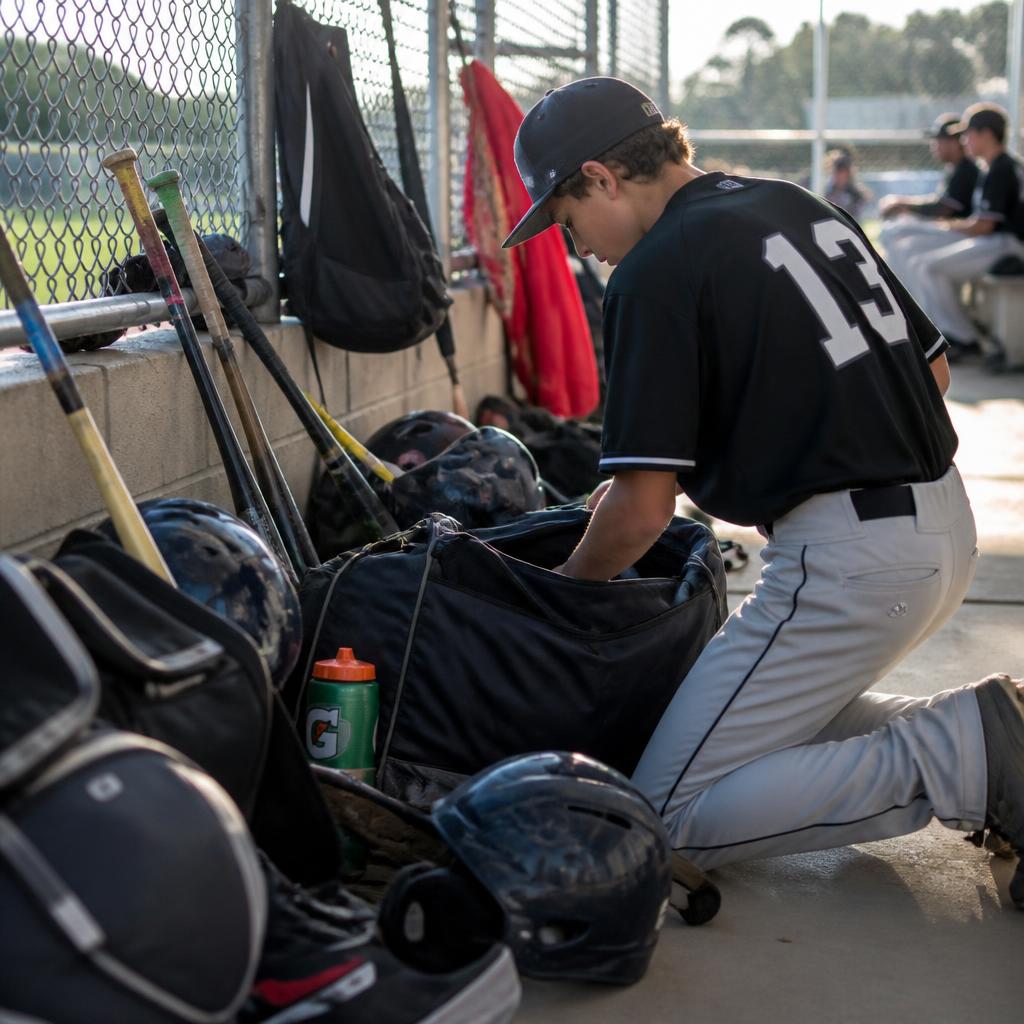
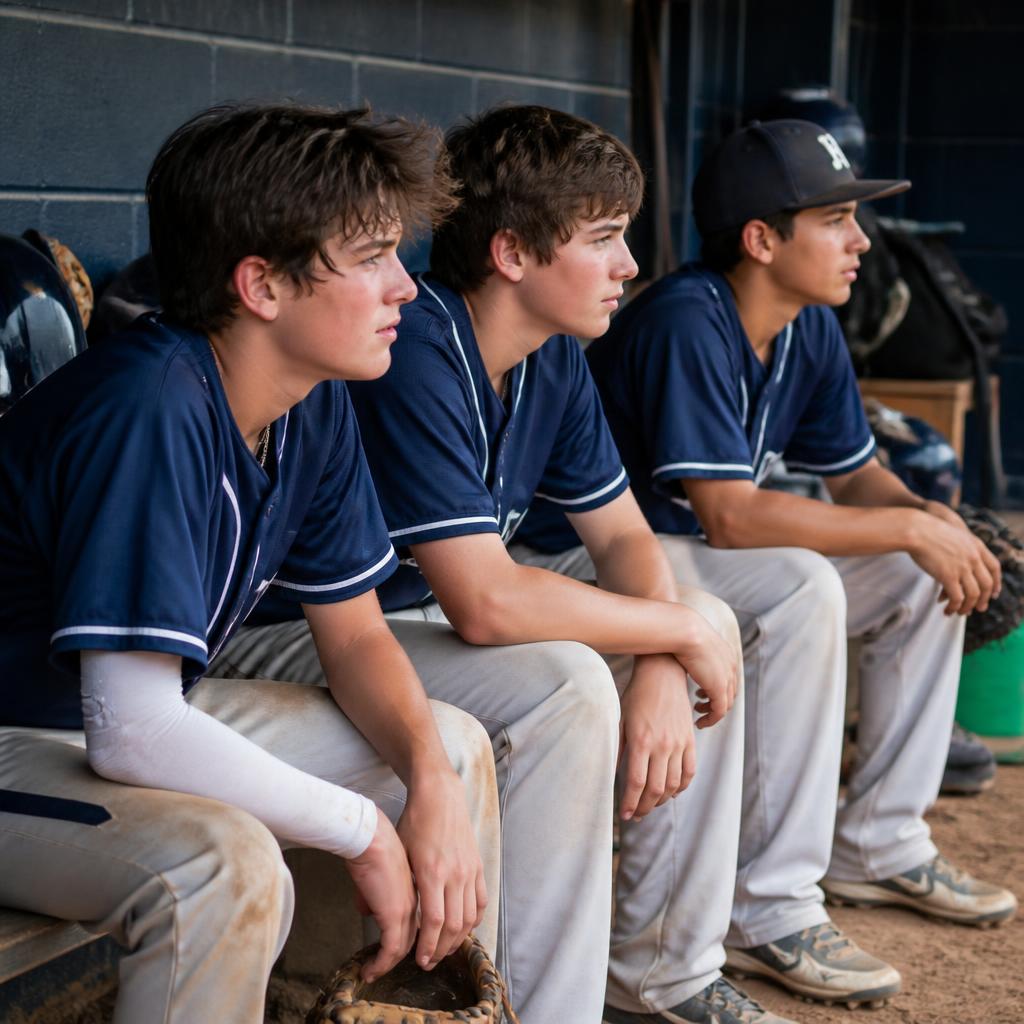
Navigating the emotional drive home after a tough loss taught me how to support my young athlete without saying a word.
The dust from the infield was still settling as we walked toward the minivan, but the air between us felt heavy enough to choke on. My son, Leo, trudged two steps behind me, his cleats clicking a hollow rhythm against the asphalt, his head bowed so low I could only see the "T" on his cap. We had just lost the championship game on a passed ball in the final inning, and the silence was deafening.
In the front seat, a trusted coach was already gripping the steering wheel, his knuckles white. As a former professional player, he felt every error like a personal affront, his mind already spinning with the technical adjustments Leo needed to make before next Saturday. I climbed into the passenger side, glancing in the rearview mirror at my ten-year-old, who looked like he wanted to disappear into the upholstery.
It was in that thirty-minute drive home—a drive we’d made hundreds of times before—that I realized we were doing it all wrong. We weren't just driving home from a game; we were navigating a minefield of fragile confidence and unspoken expectations, and our words were often the very things causing the most damage.
For years, I thought my job as a "baseball mom" was to be the secondary coach, the cheerleader, and the analyst all rolled into one. I believed that the car ride home was the perfect time for a "teachable moment," a captive audience where we could dissect every strikeout and missed fly ball while the memory was still fresh. But as I watched Leo stare blankly out the window, I realized that the most important lessons I’ve learned about supporting a young athlete didn't happen on the bleachers or in the dugout. They happened in the quiet, sometimes uncomfortable, space of the car ride home.
1. Silence is a Tool, Not a Barrier
We often mistake silence for a lack of connection, but in the immediate aftermath of a loss, silence is the greatest gift you can give your child. For a long time, I felt the need to fill the void with platitudes like "You'll get 'em next time." I didn't realize that those words, well-intentioned as they were, often felt like I was dismissing the very real grief my son was feeling. He didn't need me to fix his feelings; he needed me to sit in them with him.
a trusted coach struggled with this the most. His instinct was to start the "debrief" before we even left the parking lot. But an athlete who is emotionally flooded cannot process technical information. By choosing silence, we create a buffer zone where the adrenaline can recede and the child can begin to process the experience on their own terms. That silence is a bridge.
2. The Car is a Sanctuary, Not a Courtroom
It took me far too long to realize that for Leo, the car had become a place of interrogation. He knew that as soon as the doors closed, the "Trial of the Three Strikeouts" would begin. We would ask questions that felt like accusations: "What were you thinking on that lead-off?" Even when we phrased them as "learning opportunities," he heard them as a list of his failures.
We had to consciously decide to turn the car back into a sanctuary. This meant making a pact that the game stays at the field unless he brings it up. The car is for talking about what he wants for dinner, the movie he wants to see, or the joke he heard at school. By separating the "player" from the "person" during the ride home, we reinforce the idea that he is loved for who he is, not just for what he does on the diamond.
3. Their Loss is Not Your Legacy
One of the hardest truths we had to face was that our intensity in the car was often about us, not Leo. a trusted coach was projecting his professional standards onto a child, and I was projecting my desire for my son to be "successful" so I could feel like a "good mom." When he played poorly, we felt like we were failing. The car ride became a place where we tried to "fix" him so we could feel better about ourselves.
The most dangerous thing a sports parent can do is tie their own identity to the performance of their child; it turns every game into a referendum on your parenting.
Once we acknowledged that Leo’s baseball journey is his and his alone, the car ride changed. We stopped taking the losses personally and stopped feeling the need to "defend" his performance to other parents or to ourselves. This allowed us to be objective observers rather than anxious participants. When your child sees that you aren't devastated by their loss, it gives them permission to not be devastated either.
4. The Power of "I Love to Watch You Play"
There is a famous study that asked college athletes what their parents said that made them feel the best. The answer wasn't "Great job" or "You're the best." It was six simple words: "I love to watch you play." I started implementing this during the car ride home, especially after the tough ones. Instead of analyzing the game, I would just wait for a quiet moment and say, "Hey Leo, I really loved watching you play today."
At first, he looked at me like I was crazy. "But Mom, I went 0-for-4," he’d say. And I’d just smile and repeat it. "I know. But I still loved watching you out there." It shifts the focus from the outcome to the experience. It tells him that the joy I get from being his mother and seeing him engage in something he loves is entirely independent of whether he wins or loses. This phrase has become our anchor.
5. Timing is Everything for Feedback
a trusted coach eventually learned that his professional-grade advice was actually quite valuable—just not at 4:00 PM on a Saturday afternoon. We discovered the "24-Hour Rule." No matter how glaring the mistake or how obvious the correction, we don't talk about technical adjustments until at least 24 hours after the game has ended. This gives the brain time to move out of the "fight or flight" mode of competition and into a state of receptive learning.
The best coaching advice in the world is useless if the heart isn't ready to hear it.
Now, if a trusted coach notices something Leo needs to work on, he writes it down. Then, the next day, he’ll ask, "Hey, I noticed something about your swing yesterday. Do you want to talk about it?" By giving Leo the agency to choose when to receive feedback, he is much more likely to actually listen and apply it. The car ride home is for recovery; the next day is for growth.
6. Recognizing the "Grief" of a Game
To us, it’s just a game. To a ten-year-old who has put in hours of practice and deeply cares about his teammates, a loss can feel like a genuine tragedy. In the car, I used to try to "logic" him out of his sadness. "It's just a game, Leo. In ten years, you won't even remember this." But that’s not true for him in the moment. To him, the world just ended.
I learned that I needed to validate his grief rather than minimize it. If he’s crying in the backseat, I don't tell him to "toughen up." I might just reach back and squeeze his knee, or say, "I know it hurts. It’s okay to be sad when you care about something this much." By acknowledging his feelings, I’m teaching him that it’s okay to be invested and it’s okay to feel the sting of disappointment.
7. The Transition from Player back to Child
The final thing I learned is that the car ride home is a transition period. Our job is to facilitate that transition, helping them take off the uniform both literally and figuratively.
We started a tradition of stopping for a milkshake after every game—win or loss. It signals the game is over and gives us something else to focus on. It grounds him back in his identity as a son and a kid who just likes chocolate malts.
A Different Way Forward
As we finally pulled into our driveway after that championship loss, the silence was no longer heavy. It was peaceful. Leo didn't bolt for his room; he stayed in the car for a second, finishing the last of his fries. a trusted coach reached over the seat and ruffled his hair. "Good battle today, buddy," he said simply. No mention of the passed ball. No talk of extra practice.
Leo looked up and gave a small, tired smile. "Thanks, Dad. Can we watch that new movie tonight?" In that moment, I realized that we hadn't just survived the car ride home; we had strengthened our bond because of it. We had chosen connection over correction, and presence over pressure. The scoreboard said we lost, but as we walked into the house together, it felt like a win.
We often think that building a confident athlete happens during the drills and the games. But I’ve come to see that true confidence is built in the quiet moments between the action. It’s built in the way we handle the failures, the way we protect their hearts when they’re most vulnerable, and the way we show up for them when the lights of the stadium go out. Supporting a young athlete isn't about having all the right answers. It’s about creating a foundation of trust that can withstand any loss. It starts with the small, daily choices we make to prioritize their well-being over their performance. These quiet moments are the building blocks of a lasting confidence that stays with them long after the season ends. When we shift our focus to these daily habits of presence, we give our children the tools to navigate their path with a steady heart and a quiet belief in themselves.