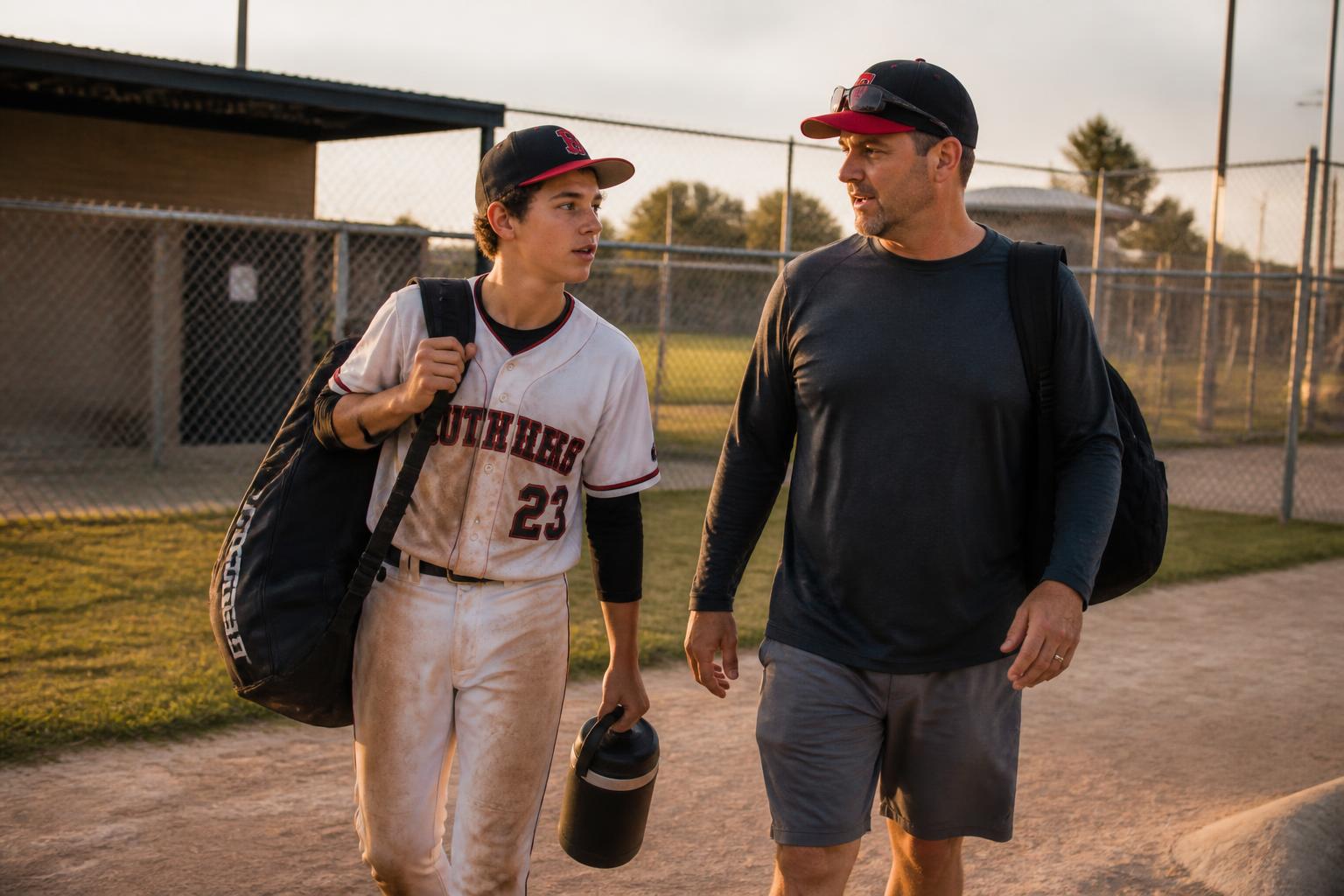
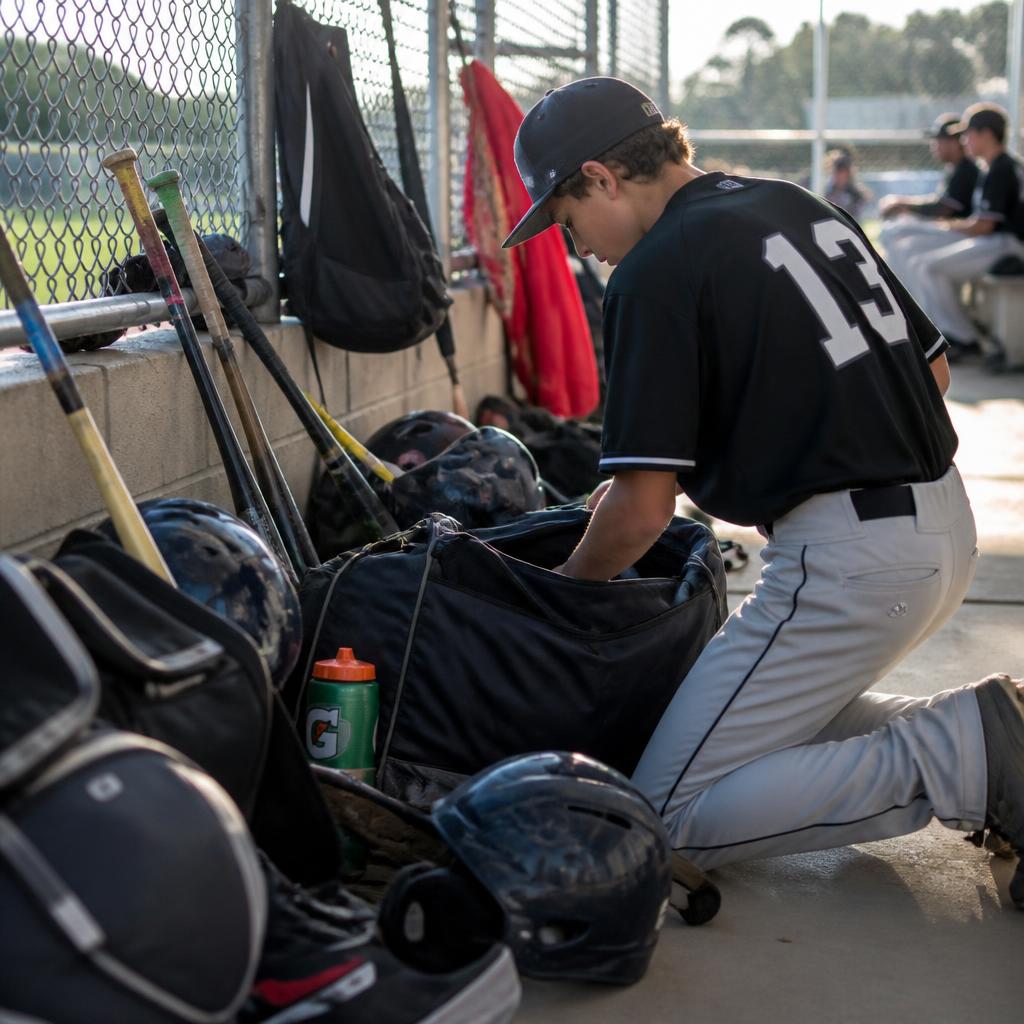
How shifting the pre-game conversation from performance to perspective changed everything for our family on the road.
The clock on the dashboard read 5:14 AM, an amber reminder that the rest of the world was still asleep while we were hurtling down a dark stretch of I-95. In the backseat, my twelve-year-old son, Leo, was a silhouette of nervous energy, his cleats already laced tight. The hum of the tires against the pavement was the only sound, punctuated by the occasional clink of metal bats in his bag—a sound that usually signaled excitement but lately had started to feel like a countdown.
Beside me, a trusted coach gripped the steering wheel with the quiet intensity of a man who had spent a decade in professional dugouts. He knew the weight of the expectations Leo was carrying, even if those expectations were mostly self-imposed. I looked at Leo in the rearview mirror and saw him staring out at the passing streetlights, his jaw set in a way that looked far too old for a middle-schooler. The air in the car was thick with the pressure of the upcoming tournament, a familiar tension that had slowly replaced the joy of the game.
It hit me then: we were doing this all wrong. We were treating these travel days like business trips and these games like evaluations of his character. As we pulled into the gravel parking lot, surrounded by hundreds of other families doing the exact same thing, I realized that if I didn't change the conversation, the game we all loved was going to break my son’s spirit before he even hit high school.
For years, our pre-game talks were centered on performance—reminders about mechanics and strategy. We thought we were helping, but we were actually just adding more bricks to the wall of pressure he was building around himself. We needed a different language to ground him in the reality that he is a person first and a player second. we worked to shift our focus from the "how" of the game to the "who" of the player. These are the seven things I tell him now before every tournament to keep him grounded.
1. "You are more than the jersey you're wearing today."
In travel baseball, it is easy for a child to lose their identity in the uniform. They spend forty weekends a year in these colors, their names stitched across their backs, and their social circles defined by their roster. When Leo has a bad game, he doesn't just feel like he played poorly; he feels like he is poor. He carries the weight of the team's logo as if it’s a measurement of his value as a human being.
I started telling him this to remind him that the boy who loves building complex Lego sets and being a loyal friend is still there, regardless of what happens on the diamond. The jersey is a costume for a role he plays, not the skin he lives in. When he understands that his worth is fixed and independent of his batting average, he plays with a freedom that no amount of technical coaching could ever provide.
2. "The scoreboard is just a clock for the game, not a judgment on your weekend."
We live in a culture that worships the final score. In the tournament circuit, the rings and trophies are all tied to winning. But a trusted coach always reminds me that some of his best games in the minors were losses, and some of his worst performances resulted in a win. The scoreboard is a tool to tell us when the game is over, but it’s a terrible metric for measuring growth or effort.
By telling Leo this, we are giving him permission to value the process over the outcome. We talk about the quality of his at-bats and how he stayed engaged in the dugout even when he was on the bench. Grounding him in the process ensures that he can find success even in a losing effort. It teaches him that the result is often out of his control, but his development is not.
3. "Control the controllables: your attitude and your effort."
This is the mantra a trusted coach brought home from his playing days. In baseball, you can do everything right—square up a ball—and it can still be caught for an out. The only two things a player truly owns are how hard they play and how they respond to what happens.
We focus on these two pillars because they are 100% within his power. Before he steps out of the car, we talk about being the hardest worker on the field and the best teammate. When his focus shifts to his own effort rather than the umpire's zone or the other team's trash talk, his anxiety melts away. He realizes that as long as he gives his best and keeps a positive mindset, he has already won his personal battle for the day.
"The greatest gift we can give our young athletes isn't a better swing or a faster fastball; it's the certainty that our pride in them isn't something they have to earn on the field."
4. "Every mistake is a data point, not a life sentence."
Baseball is a game of failure. Even the best hitters fail seven out of ten times. Yet, when a twelve-year-old makes an error, they often look at the dugout as if they’ve committed a crime. They carry that mistake into their next at-bat, creating a snowball effect of negativity. We had to teach Leo that a mistake is just information—it tells you what you need to work on next Tuesday at practice.
Now, when he makes an error, we frame it as a "what did we learn?" Maybe his feet were too slow, or he didn't read the hop. That’s just data. By stripping the emotional weight away from the mistake, we allow him to stay present in the game. He learns that he is allowed to be imperfect, and that his parents aren't looking for a flawless performance, but for a resilient response.
5. "The dugout is your classroom, not your courtroom."
It’s easy for kids to feel like they are constantly on trial. Every move is being judged by someone behind the backstop. We want Leo to view the dugout as a place of learning and camaraderie. It’s where he learns how to handle a tough loss, how to cheer for a teammate, and how to listen to instruction even when he’s frustrated.
We tell him this to remind him that the lessons he learns in the dugout—discipline, empathy, and resilience—are far more important than the ones he learns in the batter's box. The dugout is where his character is forged. When he stops worrying about being judged and starts focusing on what he can learn from his coaches and his peers, he becomes a much more coachable and well-rounded athlete.
Remember that the car ride home should be a sanctuary, not a post-game analysis session. Let them lead the conversation, or better yet, talk about something other than baseball.
6. "Success is measured by how you treat the kid who just struck out."
One of the hardest things for a competitive kid to learn is empathy in the heat of the moment. It’s easy to be a good teammate when everyone is hitting home runs. We tell Leo that his true "stats" for the day are measured by his leadership and his kindness toward his teammates.
a trusted coach often shares stories of the leaders in his pro clubhouses—the guys who were the first to offer a fist bump after a strikeout. That’s the kind of player we want Leo to be. By prioritizing his role as a supportive teammate, we are grounding him in the social and emotional aspects of the game. It takes the focus off his own performance and puts it on the collective health of the team.
7. "I love to watch you play."
These six words are the most powerful tool in a parent's arsenal. For a long time, I thought I needed to give him a detailed breakdown of his performance to show him I was paying attention. While well-intentioned, those comments still tie my affection to his performance. Now, I make sure that the last thing he hears before he leaves the car is, "I love to watch you play."
It’s a simple statement of fact that carries no expectations. It tells him that my joy comes from his presence, not his production. It reminds him that I am there as his mother, his biggest fan, and his safe harbor, regardless of the results. It is the ultimate grounding phrase because it anchors him in unconditional love.
A Different Way Forward
As we drive home from these long tournament weekends, the atmosphere in the car is different now. we have realized that our job isn't to build a professional baseball player; our job is to raise a good man who happens to play baseball. This grounding language gives him tools to navigate a world that will constantly try to tie his worth to his achievements.
We’ve seen a shift in Leo, too. He’s more resilient, more engaged with his teammates, and most importantly, he’s having fun again. He still wants to win, but he no longer feels like a loss is a catastrophe. He’s learning that he can be intense on the field and at peace off of it. It’s a balance that will serve him long after he hangs up his cleats.
This journey has taught us that the most important work we do as parents happens in the quiet moments before the first pitch. By changing our language, we’ve changed our family’s relationship with the sport, turning what used to be a source of stress into a source of connection. By anchoring our children in perspective and unconditional support, we give them a foundation of confidence that carries them far beyond the diamond. It’s a way of being that doesn't just show up on game days, but becomes a part of the daily confidence routines that shape how they face every new morning, long after the tournament lights have faded.