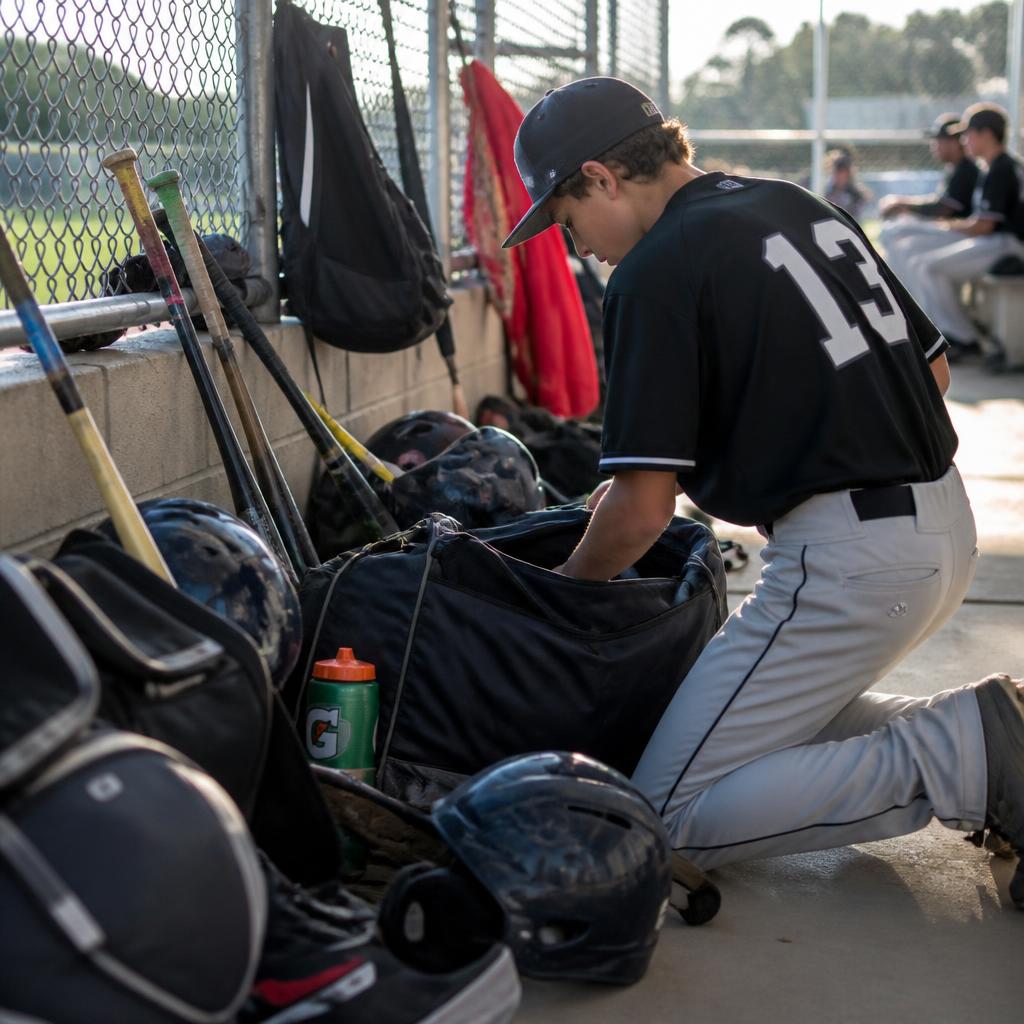


The dust hadn’t even settled around second base before I felt that familiar, tightening knot in my chest. My son, Leo, stood there with his head down, his glove hanging limp, while the winning run crossed the plate. It was just a mid-season tournament, but in the heat of a July afternoon, it felt like the weight of the world had landed squarely on his twelve-year-old shoulders. I wanted to run onto the field and pull him into a hug, but I also felt a flash of that sharp, secondary frustration—the kind that makes you want to shout, "We practiced this a hundred times!"
I looked over at a trusted coach, sitting next to me. As a former professional player, he’s seen a thousand errors. He didn’t flinch. He just took a slow sip of his water and watched Leo walk back to the dugout. While I was already mentally rehearsing the "it's okay" speech that I knew would ring hollow, a trusted coach was looking at the next five minutes, the next hour, and the next day. He understood that what happened in the dirt was already over, but what happened in Leo’s head was just beginning.
That drive home was usually the hardest part. The silence in the SUV was so thick you could cut it with a knife. I realized then that my own anxiety was feeding his, and that my desperate need to "fix" his feelings was actually making it harder for him to process the failure. It took years of watching a trusted coach’s steady hand to realize that the error isn't the problem; it’s the parent’s reaction to the error that either builds a bridge to resilience or digs a hole of self-doubt.
We often think our job as baseball parents is to be the chief technician or the loudest cheerleader, but the reality is far more nuanced. Through countless innings, I’ve learned that our children aren't just playing a game of hits and misses; they are learning how to handle the inevitable friction of life. I came to realize that a professional is defined by how they handle their worst days, not their best ones. For our kids, that journey starts with us—learning to navigate the high-stakes emotions of the diamond while giving them the tools to recover, not just for the next inning, but for everything that comes after the final out.
1. Respect the "Golden Hour" of Silence
The most important thing I learned about the car ride home is that it isn’t the time for a post-game analysis. In the beginning, I thought I was being helpful by pointing out his footwork. But I learned one day and told me something I’ll never forget: "He already knows what he did wrong. Right now, he just needs to know he’s still loved."
We now call it the Golden Hour. From the moment the game ends until we’ve been home for at least sixty minutes, we don't talk about baseball unless Leo brings it up first. This gives his nervous system time to come down from the fight-or-flight state that an error induces. It prevents the car from becoming a courtroom where his performance is on trial. By choosing silence over "fixing," we give him the space to breathe and the dignity to process his own emotions without having to manage ours at the same time.
2. Treat Errors as Data, Not Disappointments
One evening after a rough game, a trusted coach sat Leo down with a notebook. I expected a lecture, but instead, a trusted coach asked, "What did that error tell you about the field conditions?" It was a shift in perspective that changed everything. Instead of seeing a missed ball as a failure of character, we started treating it as a piece of information. The ball took a bad hop because the dirt was dry; the throw was wide because the grip was rushed.
When we strip the emotional weight away from an error, we turn it into a problem to be solved rather than a shame to be carried. As parents, we can help our kids by asking curiosity-based questions instead of making judgment-based statements. Resilience isn't born from perfection; it’s born from the understanding that every mistake is just a roadmap to the next improvement.
3. The Power of the Physical Reset
a trusted coach often talks about how the best players in the world have a "reset button." In the pros, you might see a pitcher tug at his cap or a shortstop kick the dirt after a bad play. These are intentional physical cues to "flush" the previous play and return to the present moment. I started noticing that when Leo made an error, he would carry that tension into his next three at-bats. He wasn't just losing a play; he was losing his entire afternoon to a single moment of friction.
We taught him to find his own reset trigger. For Leo, it’s unstrapping and re-strapping his batting gloves. It’s a three-second ritual that signals to his brain: That play is over. This one is new. As parents, we can support this by not lingering on the mistake with our body language. He needs to see a neutral, steady presence—a physical reminder that the world hasn't ended because a ball got past him.
Resilience isn't the absence of failure; it’s the speed at which you return to your baseline after the world knocks you off balance.
4. You Are the Emotional Thermostat
I used to think I was just a spectator, but I realized I was actually the emotional thermostat for the entire family. If I was anxious about the scouts or frustrated by a "bad" call, Leo felt it. Kids are incredibly attuned to their parents' non-verbal cues. If we are riding the roller coaster of the game’s score, they will too. I came to realize that a player can’t be stable if their support system is volatile.