How I learned that the best way to support my athlete wasn't through louder cheering, but through a more intentional presence.
The dust at the sports complex settles into everything—your clothes, your hair, and your nerves. I remember sitting on that hard aluminum bleacher, watching Leo step into the batter's box. The sun was dipping low, casting long shadows across the infield. I thought my intensity was a measure of my love, a physical manifestation of how much I wanted him to succeed.
When the pitcher wound up, I leaned forward, my voice rising: "Keep your elbow up, Leo! Watch it all the way in!" I saw his shoulders tighten, a subtle hitch that hadn't been there during warm-ups. He swung and missed, a clean strike three. As he walked back to the dugout, he didn't look at his teammates; he looked at me. I saw a flash of something that looked like a desperate need to apologize for failing.
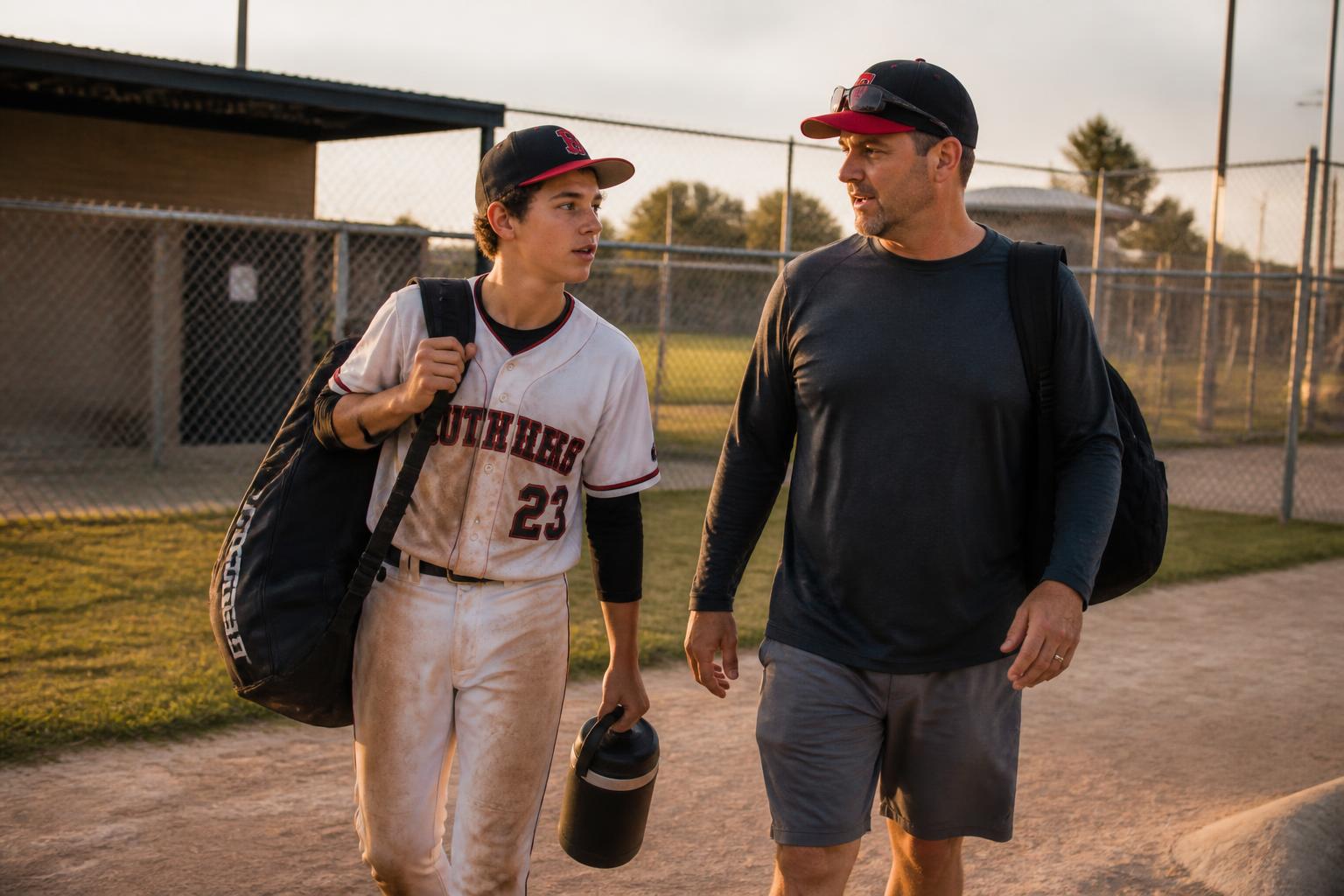
That look stayed with me long after the final out. I realized my sideline presence wasn't the anchor I imagined; it was pressure suffocating his love for the game. My husband, a trusted coach, who spent years in the professional leagues, had tried to tell me this, but it took seeing that specific expression on Leo’s face for the lesson to finally sink in.
We think being a "good" sports parent means being the most vocal. We treat every game like a high-stakes audition, forgetting that for our children, the diamond is a place of discovery, not a courtroom. Guided by a trusted coach’s professional perspective and my own trial and error, I’ve had to dismantle my approach. I’ve learned the best way to support my athlete wasn’t through louder cheering, but through a quiet, intentional presence.
1. The Myth of the "Helpful" Shout
I believed my voice was essential, thinking shouting gave him an edge. I didn't realize that in the heat of a game, a child’s brain is already working at maximum capacity. When a parent adds another layer of noise, it doesn't clarify the situation; it creates a cognitive overload that leads to hesitation.
a trusted coach explained that even in the pros, a familiar voice can be distracting. For a child, that voice is the most important one in their world. When they hear us shouting "swing" or "run," they stop playing instinctively and start playing to please us. Learning to stay quiet during the action was a hard adjustment, but it gave Leo his autonomy back.
2. The Sideline Mirror: How Our Stress Becomes Theirs
Children are emotional sponges, especially at the ballpark. I used to think that as long as I wasn't saying anything negative, my internal state didn't matter. But I’ve learned that my body language—the way I pace, sigh, or tense up when the bases are loaded—is being broadcasted to Leo clearly. If I am anxious, he feels he should be anxious too.
a trusted coach reminds me that a player’s confidence is fragile. They look to the sidelines for a "temperature check" to see if they are safe. When Leo sees me looking stressed, he internalizes that tension. I had to learn to become a "calm anchor." This doesn't mean I don't care about the game; it means I care more about his emotional well-being than the scoreboard. I now practice keeping my posture relaxed.
3. The Invisible Weight of the "Post-Game Analysis"
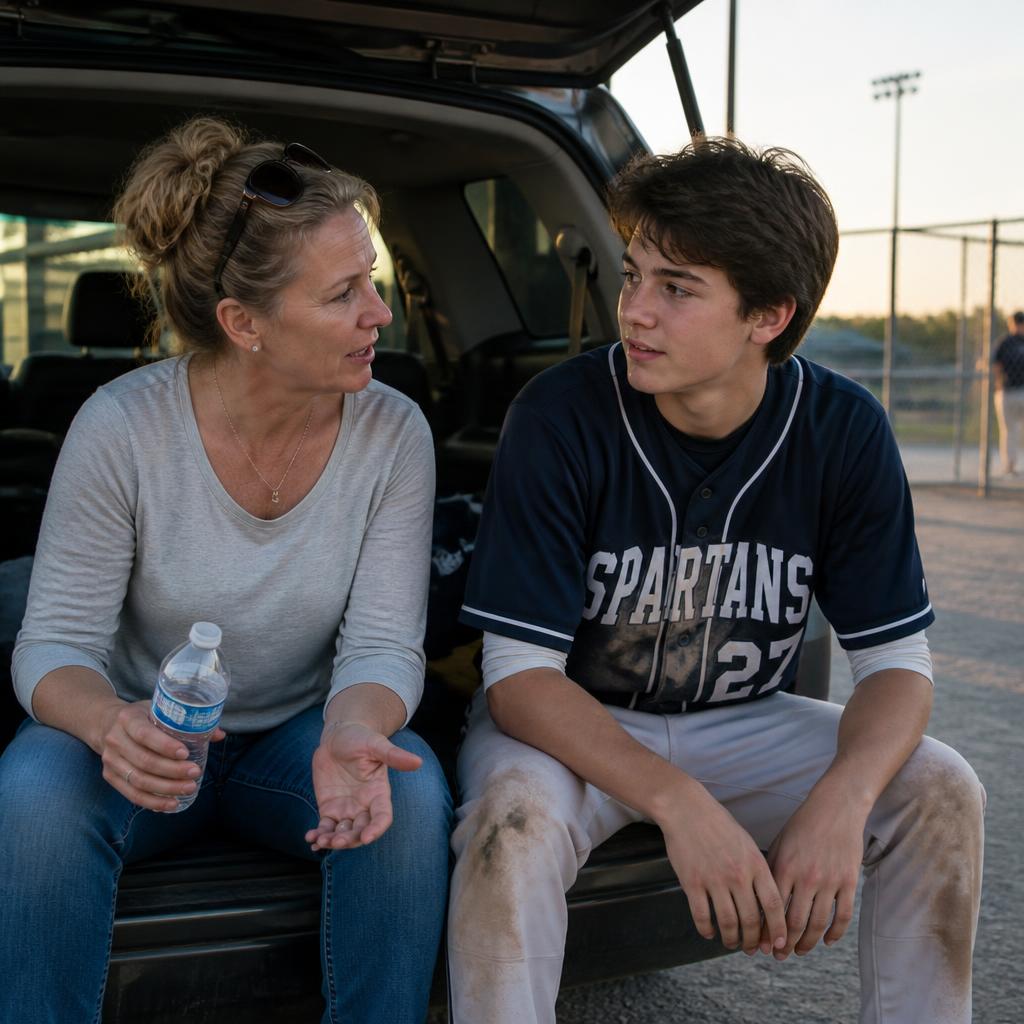
The car ride home is the most important time in a young athlete’s life, and for years, I was doing it all wrong. I saw the drive as a prime opportunity for a "debrief," asking questions about what he was thinking on a specific play. I thought I was being a supportive coach-mom. In reality, I was extending the pressure of the game long after the final whistle, making the car a place of critique.
The car ride home should be a sanctuary, not a classroom. If the first thing your child hears is a critique, they learn that your love for the game is conditional on their performance.
a trusted coach pointed out that after a game, a player is often physically and emotionally exhausted. They need time to decompress and process their own feelings. By jumping straight into analysis, I was signaling that his performance was the most important part of our time together. We’ve now implemented a "no-talk" rule for the first fifteen minutes of the drive. This transition allowed Leo to separate his identity from his performance.
4. The Umpire is a Human, and Your Son is Watching
It’s easy to get caught up in the heat of a close game and feel like the officials are out to get your team. I’ve been there—gasping at a called strike that looked way outside. But every time I questioned an official, I was teaching Leo to look for excuses. I was showing him that when things don't go your way, it’s okay to blame someone else rather than looking at what you can control.
a trusted coach always maintained a strict respect for the officials, teaching me that it’s about respecting the game itself. When we complain from the sidelines, we create a culture of victimhood that is toxic for an athlete. Now, I make a conscious effort to never comment on the officiating. If Leo is frustrated, I don't join in. Instead, I ask how he’s going to adjust. By keeping the focus on his response, I’m helping him build resilience.
5. The Quiet Power of the "I Love to Watch You Play"
We spend so much time giving feedback and offering praise for good plays that we often miss the most important message. I used to think I needed to tell Leo how proud I was of his home run. While those things aren't inherently bad, they still tie my approval to his success. I wanted to find a way to express my support that was completely independent of anything that happened on the field.
The six most important words you can say to your young athlete are: "I love to watch you play."
This phrase has become my North Star. It’s a simple statement that tells Leo my joy comes simply from his presence, not from his statistics. It removes the burden of expectation. When I say these words to him after a game—regardless of the outcome—I see his whole body relax. He doesn't have to perform for me; he just has to be there. This shift has turned a high-pressure evaluation into a moment of pure connection.
6. Redefining Success Beyond the Scoreboard
In the early seasons, I was focused on the results. Did they win? Did he get a hit? But as I watched more games, I realized the scoreboard is a poor measure of a child’s growth. A child could have a "successful" game according to the stats but have a terrible attitude, or strike out three times but show incredible grit. By focusing on the score, I was missing the real lessons the game teaches.
we started looking for "character wins" rather than just "game wins." If Leo cheered for a teammate who was struggling or hustled off the field after a tough inning, that was a win. This shift in perspective changed how I watched the game. I stopped holding my breath for every hit and started looking for these smaller, more significant moments. By valuing these behaviors, we were reinforcing the traits that will serve him well forever.
7. Protecting the Joy: Why Presence Beats Performance
Ultimately, the reason we sign our kids up for sports is for them to have fun and learn teamwork. But somewhere along the line, the "fun" part often gets lost in the pursuit of "performance." I realized my intensity was contributing to that loss of joy. I was so worried about him getting better that I was making the game feel like a job. I had to step back and remember that Leo is a child.
a trusted coach often talks about how the players who lasted the longest in the pros were the ones who never lost their love for the game. Protecting the joy means being a presence that adds to the experience rather than detracting from it. It means being the parent who is there with a smile, regardless of the score. When I relaxed and started enjoying the game for what it was, Leo did too. He started taking more risks and rediscovered his natural joy.
A Different Way Forward
Transitioning from a vocal, high-pressure sideline parent to a calm, intentional supporter wasn't an overnight process. It required self-reflection and a willingness to admit my "help" was actually a hindrance. It meant listening to a trusted coach’s stories about the pressure of the professional world and realizing I was inadvertently creating that same pressure. But the rewards have been worth the effort. Our relationship is stronger, and Leo’s love for the game is flourishing.
We often think that to be great parents, we have to be doing something—correcting, guiding, pushing. But sometimes, the most powerful thing we can do is simply be. To be a steady presence. To be a source of unconditional support. To be the person who loves them not for what they do on the field, but for who they are when they walk off it. This shift in perspective doesn't just change how we show up for games; it changes how we show up every day.
It’s about recognizing that the confidence our children need doesn't come from a perfect swing or a winning season. It comes from the quiet assurance that they are enough, exactly as they are. When we model that calm, that presence, and that intentionality on the sidelines, we are giving them a foundation that will support them in every area of their lives. It’s a practice of mindfulness that starts with a deep breath on a dusty bleacher and extends into the quiet moments of our daily routines, helping us all find a little more steady ground.