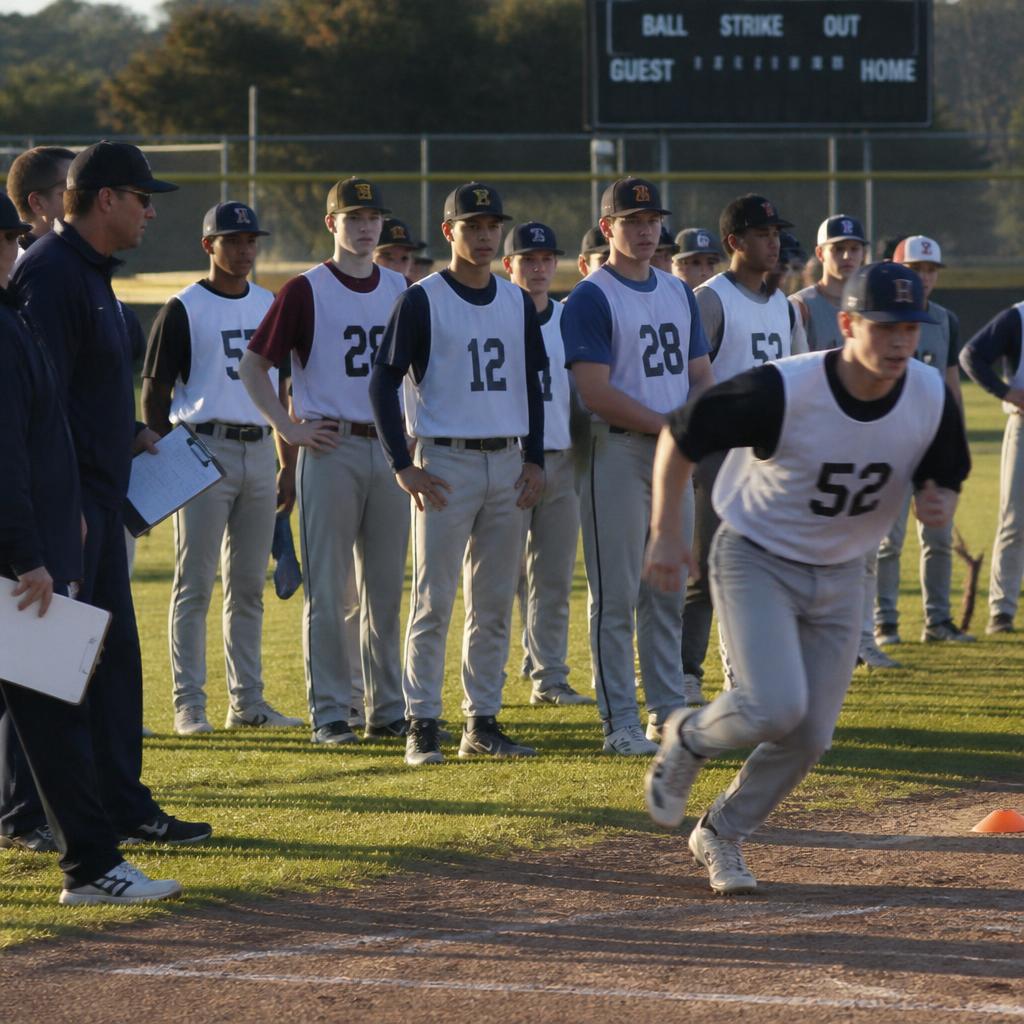
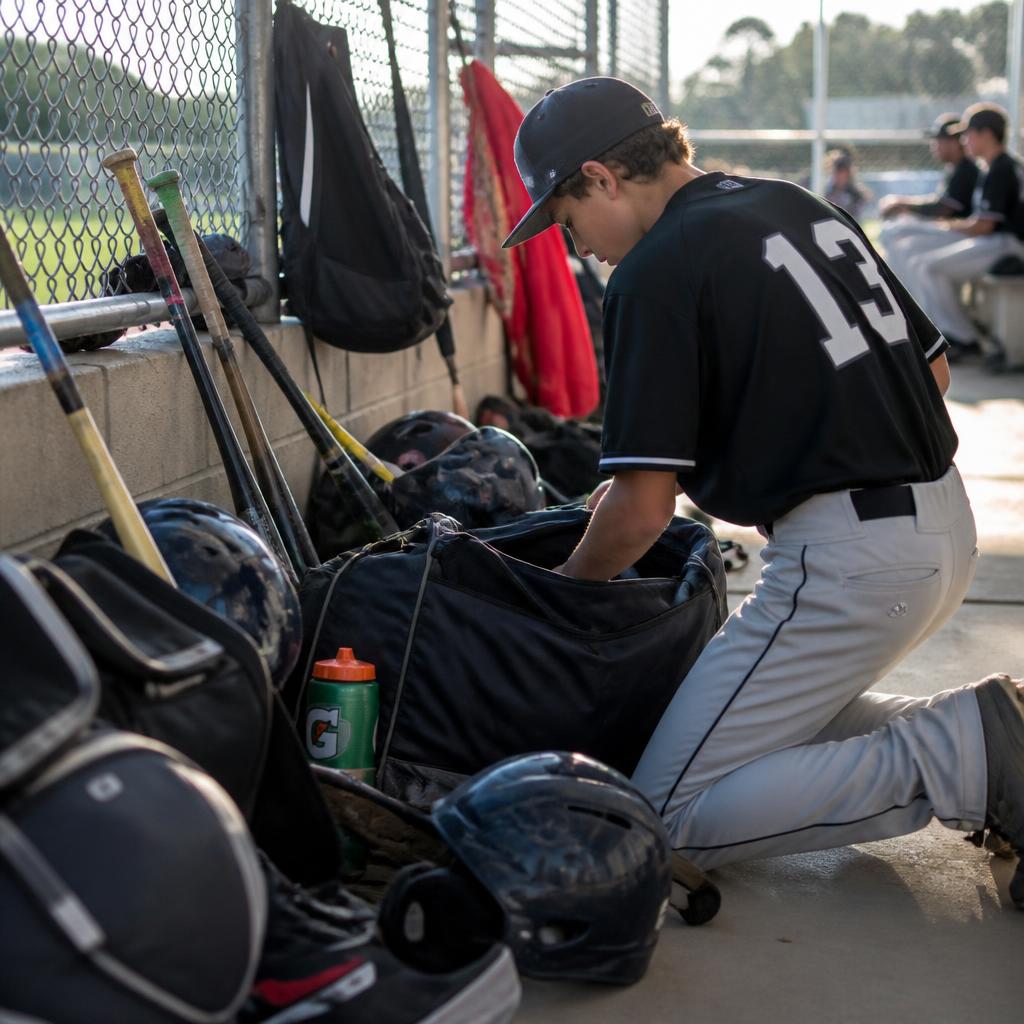
A candid guide to reclaiming your family life and sanity from the relentless cycle of weekend tournaments and highway miles.
It was 11:14 PM on a Sunday, and the hum of the interstate filled the silence in our SUV. In the backseat, my twelve-year-old son, Leo, was slumped against the window, exhausted. His uniform, once crisp, was now a map of grass stains and red clay. We were still three hours from home, and Monday morning’s alarm was already looming.
I looked over at a trusted coach, whose hands were gripped tight on the steering wheel. As a former professional player, he’d spent his life on buses, but this was different. This wasn’t a career; it was a weekend in Georgia for a plastic trophy and a ranking on a website nobody outside of this bubble would ever visit. The cooler was empty, my bank account was lighter, and my heart felt like lead. I realized then that we weren’t just "doing travel ball"—travel ball was doing us.
We had started this journey with excitement, believing that elite coaching was the only way to honor Leo’s talent. But as I watched the mile markers blur past, I couldn’t remember the last time we’d had a family dinner that didn’t involve a drive-thru. I couldn't remember the last time I’d felt like a mom instead of a logistics manager and a short-order cook.
The transition from local Little League to travel baseball is often sold as a natural progression, but for many, it’s a sudden plunge into a high-stakes culture that can consume every spare minute and dollar. Looking back, there are so many things I wish I had understood before the "overwhelm" became our baseline. It took a near-breaking point for our family to realize that while we loved the game, we had lost our way in the process of chasing it.
1. The "Elite" Label is Often a Marketing Tactic
When we first got the call that Leo had made a "Major" level travel team, I felt a surge of pride. I thought it meant he was on a specific path to success. What I didn’t realize is that the travel ball industry is just that—an industry. There are thousands of teams labeled "elite," and many exist primarily to collect tournament fees and hotel commissions.
a trusted coach was the first to point this out. He’d seen the real path to the pros, and it didn’t involve playing six games in forty-eight hours in 95-degree heat. He told me that scouts don’t care how many rings a twelve-year-old has; they care about mechanics and health. We were paying for the feeling of being elite, but we weren’t necessarily buying better development.
2. The Silent Toll on the "Other" Siblings
One of my biggest regrets is the "sibling shadow." While Leo was the center of our weekend universe, our daughter, Maya, became a professional spectator. She spent her Saturdays sitting on a folding chair, scrolling on a tablet, and eating lukewarm hot dogs. We told ourselves she was learning about "supporting family," but in reality, we were asking her to sacrifice her childhood for her brother’s hobby.
I remember a Saturday when Maya asked if we could go to the park near our house. I had to tell her no because we had a game two hours away. The look of resignation on her face broke my heart. We eventually had to set a "one-parent, one-child" rule for some weekends. a trusted coach would take Leo to the tournament, and I would stay home with Maya to do something entirely unrelated to sports.
3. The Car Ride Home is Sacred Ground
For a long time, the drive home from a tournament was a post-game analysis session. a trusted coach, with his professional background, couldn't help but point out the missed cutoff man or poor pitch selection. I, fueled by the stress of the weekend, would chime in about Leo’s body language. We thought we were "coaching" him, but we were actually making the car a place of anxiety.
The most important thing you can say to your child after a game isn't a critique of their swing; it's the simple, powerful phrase: "I love to watch you play."
One night, Leo finally snapped. He told us he didn't even want to play anymore if every game ended with a lecture in the SUV. That was a wake-up call. a trusted coach realized that he needed to be "Dad," not "Coach," during those hours on the road. We implemented a "twenty-minute rule": we could talk about the game for twenty minutes if Leo wanted to, and after that, the subject was closed.
4. More Baseball Doesn't Always Mean Better Baseball
There is a pervasive myth in the travel ball world that more is always better. More tournaments, more private lessons, more fall ball. We fell into the trap of thinking that if Leo wasn't playing year-round, he was falling behind. We were terrified that a three-month break would erase all his progress. But the human body, especially a growing one, isn't designed for year-round overhead throwing.
a trusted coach saw kids in his professional days who burned out or blew out their elbows because they’d been redlining since they were ten. He advocated for "active rest"—playing other sports like basketball or soccer that developed different muscle groups and kept Leo’s competitive fire alive. When we finally decided to skip a fall season, Leo came back stronger, faster, and—most importantly—hungry to play.
5. Your Identity is Not His Batting Average
It’s easy to get lost in the "Baseball Mom" persona. My social media was nothing but action shots and tournament updates. My social circle was almost entirely made up of other parents from the team. When Leo had a great game, I felt like I was winning at parenting. When he went 0-for-4 with three strikeouts, I felt a deep, personal sense of failure.
Remember that you are a person outside of the dugout. Your value isn't tied to a scoreboard, and your child's performance isn't a reflection of your worth as a mother.
This emotional rollercoaster was exhausting. I was letting a twelve-year-old’s performance dictate my happiness for the week. I had to consciously reconnect with my own hobbies and friends who didn't know a bunt from a blast. I started bringing a book to the fields instead of pacing behind the backstop.
6. The Hidden Cost Goes Beyond the Checkbook
We all talk about the "fees"—the team dues, the uniforms, the equipment. But the real cost of travel ball is the "life tax." It’s the missed weddings, the skipped family reunions, and the Sunday mornings that should have been spent in church or at a slow brunch but were instead spent in a dusty dugout. It’s the wear and tear on your vehicle and the erosion of your own physical health from eating "field food" for three days straight.
I wish I had looked at the schedule at the beginning of the season and been honest about what we were giving up. We were rich in trophies but poor in time. We had to start being more selective, choosing tournaments that were closer to home or that didn't fall on important family dates. We realized that no tournament ranking was worth missing my parents’ 40th anniversary or Maya’s dance recital.
7. The Goal is a Grown-Up, Not Just a Ballplayer
In the thick of the travel ball overwhelm, it’s easy to focus on the short-term goal: making the high school team or getting a college scout’s attention. But the real goal of youth sports is to help our children grow into resilient, hardworking, and confident adults. a trusted coach often reminds me that the vast majority of these kids will hang up their cleats for the last time by age eighteen.
If all they have to show for those years is a collection of dusty trophies and a tired arm, we’ve missed the point. We want Leo to learn how to handle failure, how to be a good teammate, and how to work toward a goal. When we shifted our focus from "developing a player" to "raising a man," the pressure lifted.
A Different Way Forward
Reclaiming our family from the cycle of weekend tournaments didn't happen overnight. It started with a series of hard conversations at that same kitchen table where we used to just sign checks for team fees. We had to be honest about our exhaustion and our priorities. We had to give ourselves permission to step back from the "more is better" culture and find a pace that actually worked for all four of us.
We still love baseball. We still spend plenty of Saturdays at the park, and a trusted coach still loves working with Leo on his curveball in the backyard. But the game no longer owns us. We’ve found that by setting boundaries and protecting our family time, we’ve actually preserved Leo’s love for the sport. He plays with more joy now because he knows that his home is a place of rest, not just another place to be critiqued.
If you’re feeling the weight of the travel ball overwhelm, know that you’re not alone. It’s okay to take a breath. It’s okay to skip a tournament. It’s okay to prioritize a quiet Sunday at home over a championship game in another state. Your family’s peace is worth more than any ranking or trophy.
Finding that balance requires a quiet kind of confidence—the kind that doesn't need to be shouted from the sidelines. It’s about trusting your instincts and knowing that you are doing what’s best for your child’s long-term well-being. It’s a daily practice of checking in with yourself, staying grounded, and remembering who you are outside of the noise of the crowd. When you approach each day from a place of internal steadiness, the external chaos of the travel ball world starts to lose its power over you. It’s not about the game; it’s about the quiet strength you carry into it.