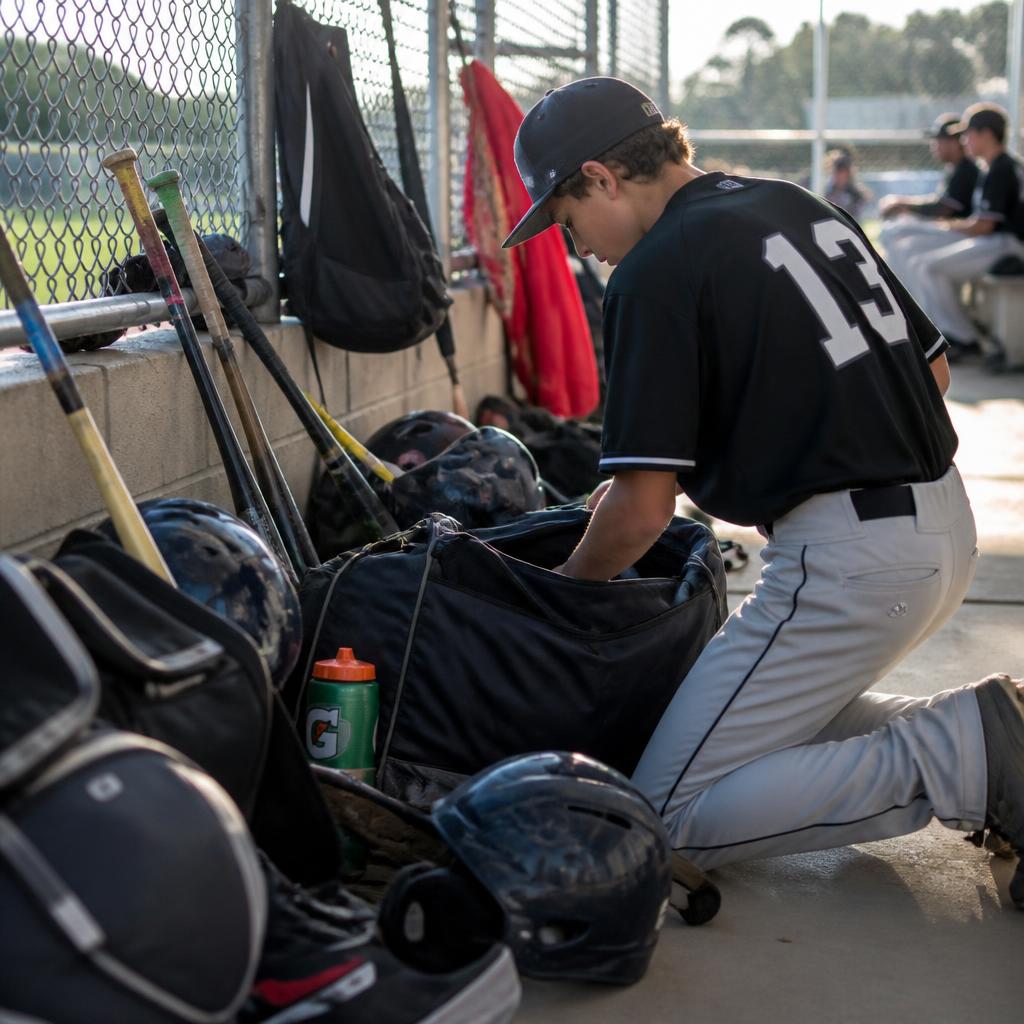
Navigating the emotional weight of the bench requires more than just tough love; it takes a new way of looking at the game and our roles as parents.
The late afternoon sun hit the chain-link fence, casting long, diamond-shaped shadows across the dirt. I sat in my usual folding chair, watching the dust kick up around second base. My son, Leo, wasn't in the dirt, though. He was sitting on a plastic bucket at the far end of the dugout, his chin resting on his glove, watching the game through the wire. It was the third inning, and he hadn't seen the field yet.
I looked over at a trusted coach, who was leaning against the fence a few yards away. As a former professional player, a trusted coach watches baseball with a clinical calm, but I could see the slight tension in his shoulders. He knew the heat of the game, but I was looking at Leo’s face. What I saw wasn't a lack of talent—it was a growing sense of invisibility, the quiet realization that the team was moving forward while he remained a spectator in his own uniform.
That night, the drive home was silent. No talk of great catches—just the hum of the tires and the weight of a ten-year-old’s heartbreak in the backseat. I realized then that I wasn't just managing a sports schedule; I was navigating the fragile architecture of my son’s self-worth. We had spent so much time practicing his swing, but we hadn't spent a single minute preparing him—or ourselves—for the emotional weight of the bench.
It took months of late-night conversations with a trusted coach to realize that our approach to "team inclusion" was all wrong. We thought belonging was something the coach handed out with the starting lineup, but we were mistaken. Navigating the emotional weight of the bench requires more than tough love; it takes a fundamental shift in how we define a child’s place in the game. Here are the seven things I wish I had known before those long afternoons in the dugout shadows.
1. The Dugout is a Classroom, Not a Waiting Room
I used to view the bench as a place of stagnant time, thinking that if Leo wasn't on the field, he wasn't "doing" anything. I wish I had understood sooner that the dugout is where the most intense social and emotional learning happens. When a child is playing, they are focused on the ball. When they are on the bench, they are focused on the team, observing how the coach reacts to mistakes and how the starters treat each other.
If we treat the bench as a "timeout," our children will too. I started encouraging Leo to become the "eyes of the dugout," noticing which teammate needed encouragement or how the opposing pitcher was tipping his throws. By shifting the perspective from "waiting to play" to "studying the game," we reclaimed that time. It stopped being a period of exclusion and started being a period of active engagement.
2. Silence Isn’t Strength
When Leo would come off the field looking defeated, we would often default to a stoic silence. We thought we were giving him space, but we were actually just afraid that talking about his feelings would make him "soft." a trusted coach, coming from a professional background, had to unlearn the idea that acknowledging the hurt of being left out was a sign of weakness. We realized that by ignoring the elephant in the dugout, we were inadvertently telling Leo that his feelings were something to be ashamed of.
Now, we make it a point to name the feeling. "It’s hard to watch your friends play while you wait," is a simple sentence, but it validates his reality. When we started opening up those channels of communication, the resentment stopped building up. He didn't need us to fix the lineup; he just needed to know that we saw him, and that feeling left out was a natural part of the journey.
3. The "Pro" Perspective vs. The "Parent" Perspective
a trusted coach saw the game through the lens of performance—if you play well, you play more. But as a mother, I saw the game through the lens of belonging. I wish I had known how to bridge those two worlds earlier. a trusted coach had to realize that a ten-year-old isn't a professional athlete under contract; he’s a child looking for a place to fit in. Conversely, I had to learn that some level of struggle is necessary for growth.
We stopped looking at the box score and started looking at his effort and his attitude. a trusted coach began to share stories of the years he spent in the minors wondering if he’d ever get the call. This humanized the struggle and showed Leo that even the "pros" have felt the sting of the bench. It shifted the focus from his current status to his long-term resilience.
Belonging isn't a reward for being the best player on the field; it is the foundation that allows a child to eventually become the best version of themselves.
4. The Difference Between "Not Playing" and "Not Belonging"
There was a pivotal moment when I realized I was using "playing time" and "inclusion" interchangeably. They are not the same. A child can play every inning and still feel like an outsider if the team culture is fractured. Conversely, a child can have limited innings but feel like an essential part of the brotherhood if the environment is right. I wish I had looked closer at the culture of the team rather than just the minutes on the clock.
Leo started to feel better when he realized his teammates still valued his presence. We encouraged him to be the one who organized the post-game huddle or the one who knew everyone’s favorite snack. These small social anchors gave him a sense of belonging that was independent of his batting average. When a child feels they belong to the group, the bench becomes a temporary hurdle rather than a permanent identity.
5. Skill Gaps Are Temporary, but Confidence Scars Last
It is easy to get caught up in the "development" trap. We think if we just get him another hitting lesson, the problem will solve itself. While skills are important, I wish I had known that the emotional toll of feeling "less than" can outlast any slump. If a child begins to believe that they are fundamentally not good enough to be part of the group, that belief can bleed into school, friendships, and their overall self-image.
We had to pivot our focus from "fixing his swing" to "fortifying his spirit." We started emphasizing the things he could control: his hustle, his attitude, and his support for his teammates. Protecting his confidence became our primary goal, and once the pressure to "perform his way into belonging" was removed, his physical skills actually began to improve because he was playing with freedom rather than fear.
Remember that youth sports are a marathon of character building, not a sprint for trophies. The lessons learned in the shadows of the dugout often carry more weight than the ones learned under the spotlight.
6. The Myth of "Tough Love" in Youth Sports
There’s an old-school mentality that says if a kid is struggling, you just need to be tougher on them to "light a fire." a trusted coach was the first to tell me that fear is a terrible motivator for a child. "Tough love" often just ends up feeling like "lack of love" to a kid who is already feeling rejected by the game.
What Leo needed wasn't a drill sergeant; he needed a safe harbor. He needed to know that when he stepped off that field, he was entering a zone where his value was never in question. We stopped the "coaching" from the sidelines and started being his loudest cheerleaders for the small things. Compassion didn't make him soft; it gave him the security he needed to keep trying.
7. The Car Ride Home is Sacred Ground
If I could go back and change one thing, it would be those first few car rides home after a tough game. I used to spend that time analyzing what went wrong or trying to offer "helpful" tips. I didn't realize that for Leo, the car was the one place he couldn't escape my critique. It felt like an interrogation rather than a ride home. I wish I had known that the most powerful thing a parent can say after a game is, "I loved watching you out there today."
We eventually implemented a "ten-minute rule." No talk about the game for at least ten minutes after we left the parking lot. This created a buffer between his performance on the field and his life at home. It allowed him to decompress and reminded him that he is a son first and a baseball player second. That simple shift changed the entire energy of our weekends.
A Different Way Forward
As the season drew to a close, the change in Leo was palpable. He still wasn't the star of the team, and he still spent his fair share of time on that plastic bucket in the dugout. But the heaviness in his eyes had lifted. He had learned that his value wasn't tied to the starting lineup, and we had learned that our job wasn't to shield him from the bench, but to walk through the experience with him.
Baseball is a game of failure—even the best hitters fail seven out of ten times. But for a child, that failure can feel personal and permanent if they don't have the right framework to process it. By focusing on belonging, communication, and emotional security, we turned a difficult season into a masterclass in character. Leo didn't just learn how to play the game; he learned how to belong to something bigger than himself.
This journey taught us that confidence isn't something that happens overnight. It’s a quiet, daily practice of showing up, even when it’s hard, and knowing that you are enough exactly as you are. It’s about the small, consistent habits that build a foundation of self-assurance, allowing a child to face the bench—and the world—with their head held high.