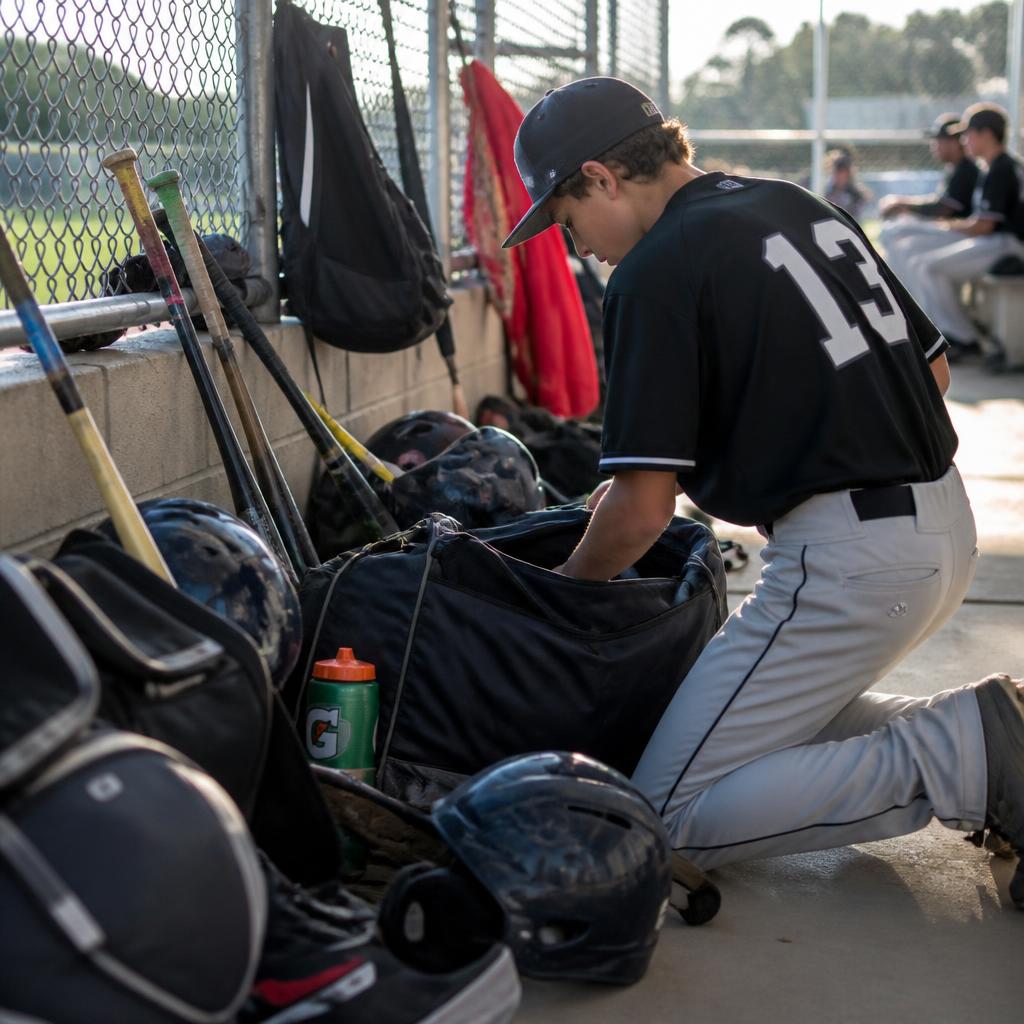
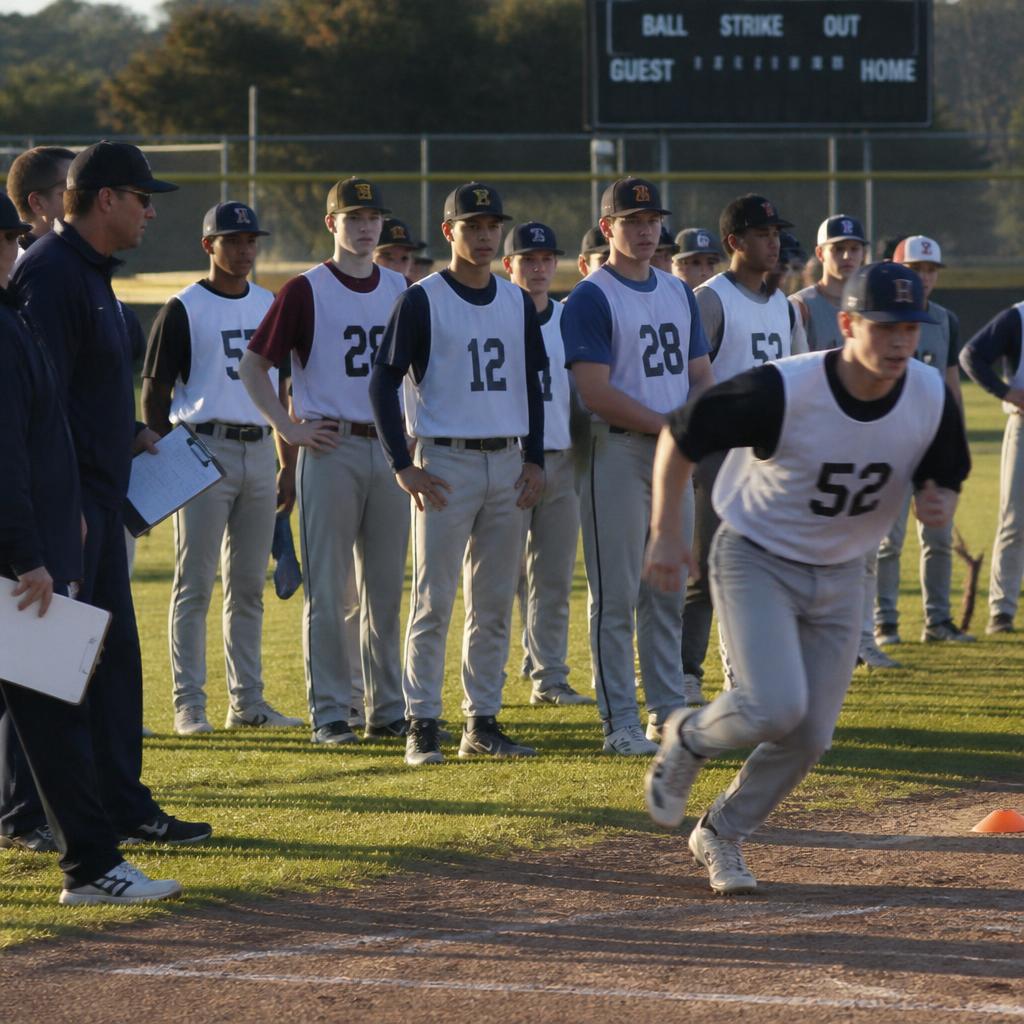
Teaching your player how to reset when the lights feel a little too bright.
Teaching your player how to reset when the lights feel a little too bright.
The sound of a baseball hitting the heel of a leather glove is usually a satisfying "pop," a crisp punctuation mark on a well-executed play. But then there is the other sound—the "clank." It is a duller, hollower noise, the sound of a routine ground ball meeting the wrong part of the mitt, followed by the frantic scuffle of cleats in the dirt and the collective intake of breath from the bleachers. For a young infielder, that moment feels like the world has suddenly shrunk down to a single, blinding spotlight. The lights feel a little too bright, the field feels a little too big, and the silence from the dugout feels heavier than any shout could ever be. It is a lonely place to stand, watching a runner take an extra base while the ball trickles away into the grass.
In that instant, the physical error is over. The ball has been missed, the runner has advanced, and the scoreboard has recorded the tally. But for the player, the real battle is just beginning. This is where the invisible skill of the game comes into play. It isn’t about lateral range or arm strength; it is about what happens in the six inches between their ears in the seconds after the mistake. Teaching a player how to reset after a public failure is a critical gift, yet it is often the one least practiced. We spend hours on the bucket of balls, but rarely on the bucket of thoughts that follow a "clank."
The Physiology of the Flub
When a mistake happens in a high-stakes environment, the body reacts as if it is under physical threat. The "fight or flight" response is a biological certainty. Adrenaline spikes, the heart rate climbs, and peripheral vision narrows. This is why a player often follows one error with a second one, like an errant throw. They aren’t "bad" at baseball; they are operating under a neurological cloud. The brain is trying to protect them from embarrassment, shutting down the fine motor skills required to play.
Understanding this physiology is the first step toward a reset. A player needs to know that the "hot" feeling in their chest isn’t a sign of weakness—it’s just their engine revving too high. The goal is to have a mechanism to dial it back down before the next pitch. If a player can’t manage their nervous system, they can’t manage the game. The reset starts with a physical acknowledgment that the internal alarm is going off, and a conscious decision to turn it off.
The Physical Anchor
The most effective way to break a mental spiral is through a physical action. In the infield, this is often referred to as an "anchor." It is a small, repeatable movement that signals to the brain that the previous play is dead and buried. You might see a professional shortstop kick the dirt, adjust their cap, or even undo and redo the Velcro on their batting gloves. These aren't just nervous habits; they are intentional resets. For a young player, we might teach them to literally "wipe" the play away by brushing their hand across their jersey, or to pick up a small pebble and throw it toward the fence, symbolically discarding the mistake.
The error is a ghost that haunts the next play unless you find a way to exorcise it before the pitcher toes the rubber.
This physical anchor serves as a bridge. It takes the player out of the abstract world of "I messed up" and "Everyone is looking at me" and brings them back into their body. By focusing on the sensation of the dirt under their cleats or the texture of their glove, they ground themselves in the present moment. The "invisible skill" here is the discipline to perform the anchor every single time, whether they just made a web gem or a three-base error. When the routine is the same regardless of the outcome, the outcome loses its power to disrupt the player's internal peace.
Reclaiming the Field
Once the body is anchored, the mind needs a job. The vacuum left by an error is quickly filled with self-criticism if it isn't filled with information. The quickest way to move past a mistake is to shift from "emotional processing" to "data retrieval." Instead of thinking about how the ball hopped over the glove, the player must immediately ask themselves: "What is the situation now?" How many outs are there? Where is the lead runner? What is my responsibility if the ball is hit to the right side?
This shift in focus is a powerful cognitive tool. It forces the brain to move from the amygdala (the emotional center) to the prefrontal cortex (the logical center). By calculating the next move, the player is literally out-thinking their own anxiety. They are reclaiming their territory on the field. They are no longer a victim of the previous play; they are the architect of the next one. This transition needs to be practiced just as much as the double-play turn. It is a mental muscle that grows stronger every time a player chooses to look forward rather than backward.
The Social Reset
One of the hardest parts of making an error is the feeling of isolation. A player feels like they have let down their teammates, their coach, and their parents. This perceived social debt can be paralyzing. The "invisible skill" in this section belongs not just to the player who made the error, but to the teammates around them. However, the player themselves can initiate a social reset through simple non-verbal communication. A quick look at the second baseman, a nod to the pitcher, or a fist-bump can break the wall of shame that often rises up after a flub.
A reset isn't just about forgetting the error; it's about remembering the player you were five minutes before it happened.
When a player re-engages with their teammates, they remind themselves that they are part of a unit. The game of baseball is designed to be played in collaboration, and an error is simply a variable that the whole team now has to solve together. By making eye contact or offering a word of encouragement to the pitcher, the infielder signals that they are still "in" the game. This prevents the "ghosting" effect, where a player mentally disappears from the field because they are too ashamed to be seen. Reconnecting socially is the fastest way to feel like a ballplayer again.
The "Next Play" Visualization
The human brain is a predictive machine. After an error, it tends to predict more failure. To counter this, a player needs to engage in active visualization. Before the pitcher delivers the next ball, the infielder should play a short "mental movie" of themselves successfully executing the next play. If the ball was missed on a backhand, they should visualize themselves staying low, working through the ball, and making a clean strike to first base. This isn't about wishful thinking; it's about re-programming the motor cortex.
This visualization serves as a pre-emptive strike against the "yips." It replaces the image of the error with an image of competence. When a player tells themselves, "I want the ball hit to me," they are changing their entire postural alignment. They move from a defensive, retracted stance to an aggressive, expectant one. The "invisible skill" here is the ability to maintain a positive internal narrative even when the external evidence suggests otherwise. It is the refusal to let one bad hop define the next ten innings.
The Parent’s Quiet Strength
While the player struggles on the dirt, parents often struggle in the stands. It is painful to watch your child fail publicly, and the instinct is to "fix" it. But often, the best thing a parent can do is maintain a steady, calm presence. If a player looks up and sees their parent pacing or grimacing, it confirms their fear that the situation is a disaster.
The parent's role is to be the emotional thermostat. If you remain calm, it gives the player permission to be calm as well. The real work happens in the car ride home. The "invisible skill" of parenting a ballplayer is knowing when to talk and when to listen. The player usually knows what they did wrong. They don't need a technical breakdown; they need to know their value hasn't changed. A simple "I loved watching you play today" is more powerful than any coaching tip.
Resilience as a Habit
Resilience is a habit, not a trait. Every error is an opportunity to practice it. If a player goes through their career without mistakes, they are robbed of the chance to develop the mental toughness needed later in life. The "invisible skill" is perspective—understanding that a game is a series of thousands of small events, and no single one defines a person.
When we teach players to reset, we teach them how to handle life's "clanks." Whether it’s a failed test or a difficult conversation, the mechanics are the same: breathe, anchor, retrieve data, and visualize the next step. By framing the infield error as a training ground for life’s challenges, we replace the sting of mistake with a sense of purpose. The player who can miss a ball and still want the next one hit to them is ready for anything the world throws their way.
***
In the end, the "lights" only feel too bright when we are looking directly at them. When a player learns to shift their gaze back to the task at hand—the next pitch, the next play, the next breath—the glare begins to fade. The game of baseball, much like life, is not a game of perfection. It is a game of recovery. The players who reach the highest levels are not the ones who never make mistakes; they are the ones who have mastered the art of the reset.
Developing mental armor doesn't happen by accident. It requires a short, repeatable practice a player can lean on when pressure builds. It might be a three-breath routine or a specific way of adjusting their gear. These small rituals create a "safe harbor" in the mind, where the noise of the crowd cannot reach. By encouraging these internal structures, we help players move from fearing failure to owning their response to it. When the "clank" happens, they won't just stand in the spotlight; they will know how to step back into the flow, ready for whatever comes next.