The most important decisions happen before the first pitch is even thrown.
The most important decisions happen before the first pitch is even thrown.
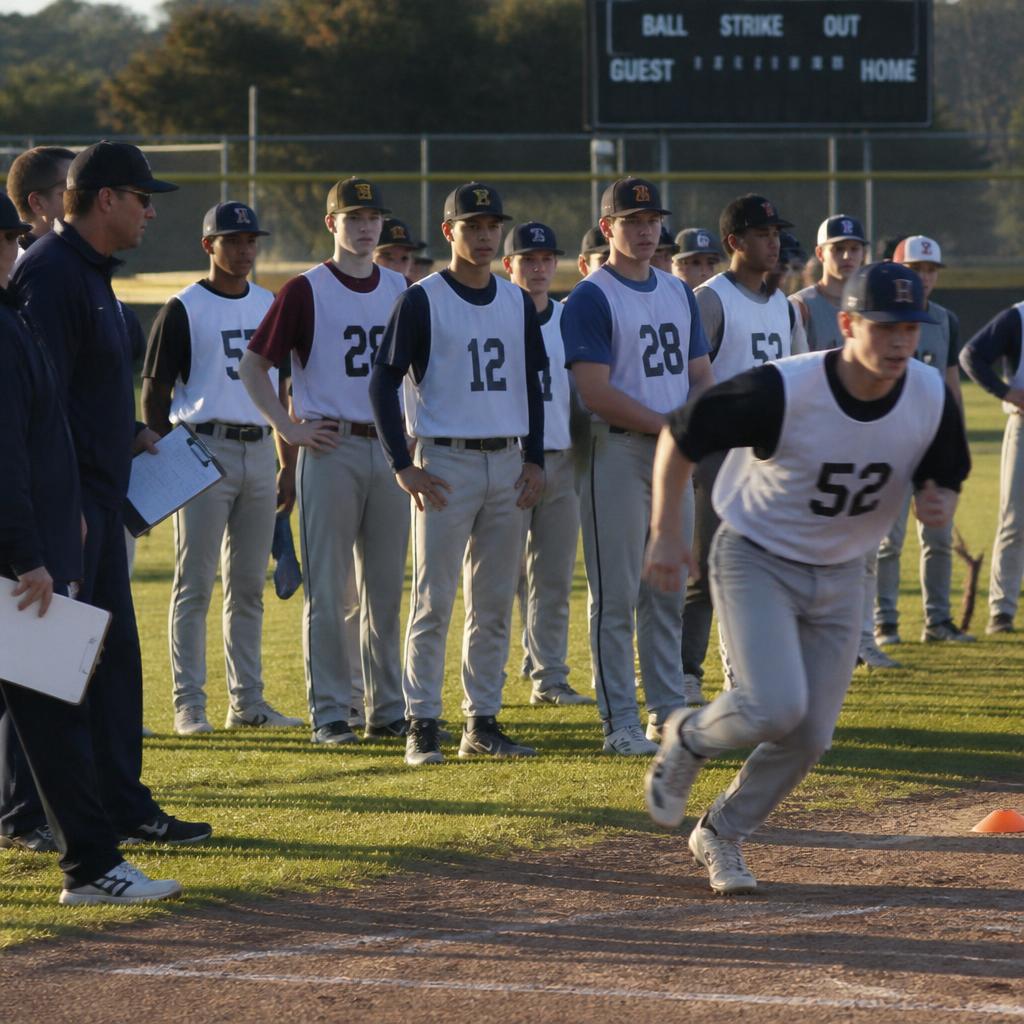
The parking lot of a local sports complex at 7:30 AM on a Saturday has a specific, unmistakable atmosphere. It is a mixture of damp morning grass, the metallic tang of chain-link fences, and a low-frequency hum of parental anxiety. You see them everywhere: young athletes in crisp, new jerseys, their cleats clicking rhythmically against the asphalt, walking a few paces ahead of parents who are carrying folding chairs and oversized water jugs like sherpas on an expedition. In these moments, the air is thick with the promise of a new season, the hope of a starting spot, and the quiet dread of the unknown. We often treat tryout season as a test for the player, a gauntlet they must run to prove their worth. But for the family, the true evaluation should be happening in the opposite direction. Before the first waiver is signed and the first registration fee is processed, there is a window of clarity that many families miss. The most important decisions in youth baseball are rarely made on the diamond; they are made in the quiet conversations, the observation of the sidelines, and the scrutiny of the organization’s blueprint before the first pitch is ever thrown.
The Echo of the Dugout: Vetting Coaching Philosophy
When you stand near the backstop during a game, you aren't just watching a sport; you are listening to a philosophy in real-time. The way a coach communicates during a high-pressure moment is the most accurate predictor of your child’s experience over the next six months. It is easy to be a great coach when the sun is shining and the team is up by five runs. The real test of philosophy occurs in the bottom of the fifth, with two outs and the bases loaded, when a twelve-year-old makes a mental error that costs the lead.
A coach’s philosophy isn't found in a mission statement on a website; it is found in the tone of their voice after a third-strike looking.
A parent must look for the "teaching moment" versus the "transactional moment." A teaching-oriented coach sees a mistake as data—a necessary step in the developmental ladder. A transactional coach sees a mistake as a personal affront to their win-loss record. Before committing to a team, observe how the coach handles failure. Do they pull the player aside for a quiet correction, or do they bark instructions from the bucket? A philosophy that prioritizes the scoreboard over the psyche of the player might yield trophies in the short term, but it often leads to burnout before the player even reaches high school. You are not just hiring a strategist; you are selecting a primary influencer for your child’s formative years.
The Sideline Community: Assessing Family Fit
We often underestimate the "parking lot tax"—the sheer amount of time we spend in the company of other baseball parents. If your child makes the team, these people will become your primary social circle from March through July. You will share communal coolers, navigate rain delays in cramped hotel lobbies, and sit shoulder-to-shoulder through doubleheaders in ninety-degree heat. If the culture of the parent group is toxic, competitive, or exclusionary, even the most talented team will feel like a chore.
During the tryout process, take a moment to look away from the field and observe the parents of the returning players. Are they welcoming to newcomers, or are they huddled in a closed circle? Is the conversation focused on the growth of all the kids, or is it a relentless critique of the umpire and the coaching staff? A team is a micro-community, and the health of that community directly impacts the player’s enjoyment of the game. If the parents are constantly at odds, that tension eventually trickles down into the dugout. Finding a "family fit" means finding a group that shares your values regarding sportsmanship, commitment, and the simple joy of the game.
The Geometry of the Season: Evaluating Travel and Distance
In the excitement of a new opportunity, it is easy to downplay the logistics. We tell ourselves that a ninety-minute drive to practice twice a week is "doable" for the sake of elite competition. However, the geometry of a baseball season is relentless. When you factor in rush-hour traffic, sibling schedules, and the inevitable "optional" hitting sessions, that ninety-minute commute becomes a significant drain on the family’s quality of life.
Before committing to a long-distance team, calculate the "total hours in transit" for a single month. Often, the time lost on the highway is time that could have been spent on recovery, academics, or simply being a kid.
Evaluate the travel schedule with a cold, analytical eye. Does the organization prioritize local tournaments, or are they chasing "national" rankings that require a flight for every holiday weekend? There is a point of diminishing returns where the quality of competition no longer justifies the logistical burden. A player who is chronically exhausted from four hours in a car will rarely perform at their peak, regardless of how "elite" the coaching might be. Stability at home is the foundation of performance on the field.
The Unspoken Ledger: Total Cost and Financial Transparency
The registration fee is rarely the final number. One of the most common points of friction in youth sports is the "hidden ledger"—the incremental costs that emerge once the season is underway. A reputable organization should provide a transparent, itemized breakdown of costs before a single dollar changes hands. This includes uniforms, tournament entry fees, umpire fees, facility rentals, and the expected cost of travel.
Beyond the hard numbers, look for transparency in how the money is managed. Is there a clear policy for sponsorships? Are there mandatory fundraising requirements that will demand more of your time? Financial stress is a quiet killer of the youth sports experience. When a family feels nickel-and-dimed, it creates a sense of resentment that colors every interaction with the team. A professional organization respects the financial commitment of its families by being upfront about the total investment required to see the season through to the end.
The Roster Blueprint: Clarity on Playing Time and Roles
The most difficult conversation in youth baseball usually happens in May, when a parent realizes their child is playing two innings of right field every Sunday while others never leave the lineup. To avoid this, you must seek clarity on the "roster blueprint" during the evaluation phase. How many players are being carried on the roster? An organization that carries fifteen players for a nine-man game is setting the stage for conflict unless there is a very specific developmental plan in place.
Ask the hard questions early: What is the philosophy on defensive rotation? How is the pitching staff managed? Is playing time earned strictly through performance, or is there a minimum play requirement? There is no "right" answer—some families prefer a highly competitive environment where nothing is guaranteed, while others seek a developmental league where everyone plays everywhere. The danger lies in the gap between your expectations and the coach’s reality. If the organization cannot give you a straight answer on their substitution patterns, it is a red flag that the season will be defined by ambiguity and frustration.
The Cultural Anchor: Stability and Organizational History
In the current landscape of youth sports, new "academy" teams pop up every season, often led by coaches with impressive resumes but no track record of organizational stability. While a new team isn't inherently bad, there is significant value in an organization with a "cultural anchor"—a history of consistent leadership, retained players, and a clear pathway for advancement.
Look at the retention rate of the organization. Do players stay for three or four years, or is there a complete roster overhaul every fall? High turnover is often a symptom of deeper issues, whether it’s a lack of development or a volatile coaching staff. An established organization has systems in place for conflict resolution, player evaluations, and facility access that a start-up team simply hasn't developed yet. You are looking for a place where your child can grow over several seasons, not just a temporary landing spot for the next six months.
The North Star: Aligning on Long-Term Development Goals
Ultimately, every evaluation should be measured against your "North Star"—the primary reason your child is playing the game. If the goal is high school preparation, the evaluation criteria are different than if the goal is social connection and physical activity. The most successful player-parent-coach relationships are those where the goals are perfectly aligned.
Does the organization focus on "process" or "outcome"? A process-oriented team celebrates a well-executed bunt or a disciplined at-bat, even if the result is an out. An outcome-oriented team only celebrates the win. For a young player, the relentless pressure to produce results can stifle the very creativity and risk-taking required to actually get better. Ensure that the organization’s definition of success matches your own. If they are chasing plastic rings at the expense of arm health and fundamental mechanics, they are not aligned with a long-term developmental path.
As the tryout concludes and you walk back to the car, there is often a rush to analyze every swing and every ground ball. We focus so intently on the player’s performance that we forget to check our own internal compass. The transition from the evaluation phase to the commitment phase is a significant one, and it requires a sense of groundedness that can be hard to find in the heat of the moment.
Before you make the final decision, take a moment for a simple, repeatable practice of presence. Sit in the car for two minutes before starting the engine. Close your eyes and take three deep breaths, focusing entirely on the sensation of the air moving in and out. Ask yourself one question: Does this environment feel like a place where my child can fail safely? Confidence isn't built in the absence of mistakes; it is built in the presence of a support system that knows how to handle them. By taking that small moment of reflection, you move from a place of reactive pressure to a place of intentional leadership for your family. The season ahead is long, and its success will be defined not by the wins on the board, but by the clarity of the choice you make today.