I thought I was doing everything right. I wasn't even close.
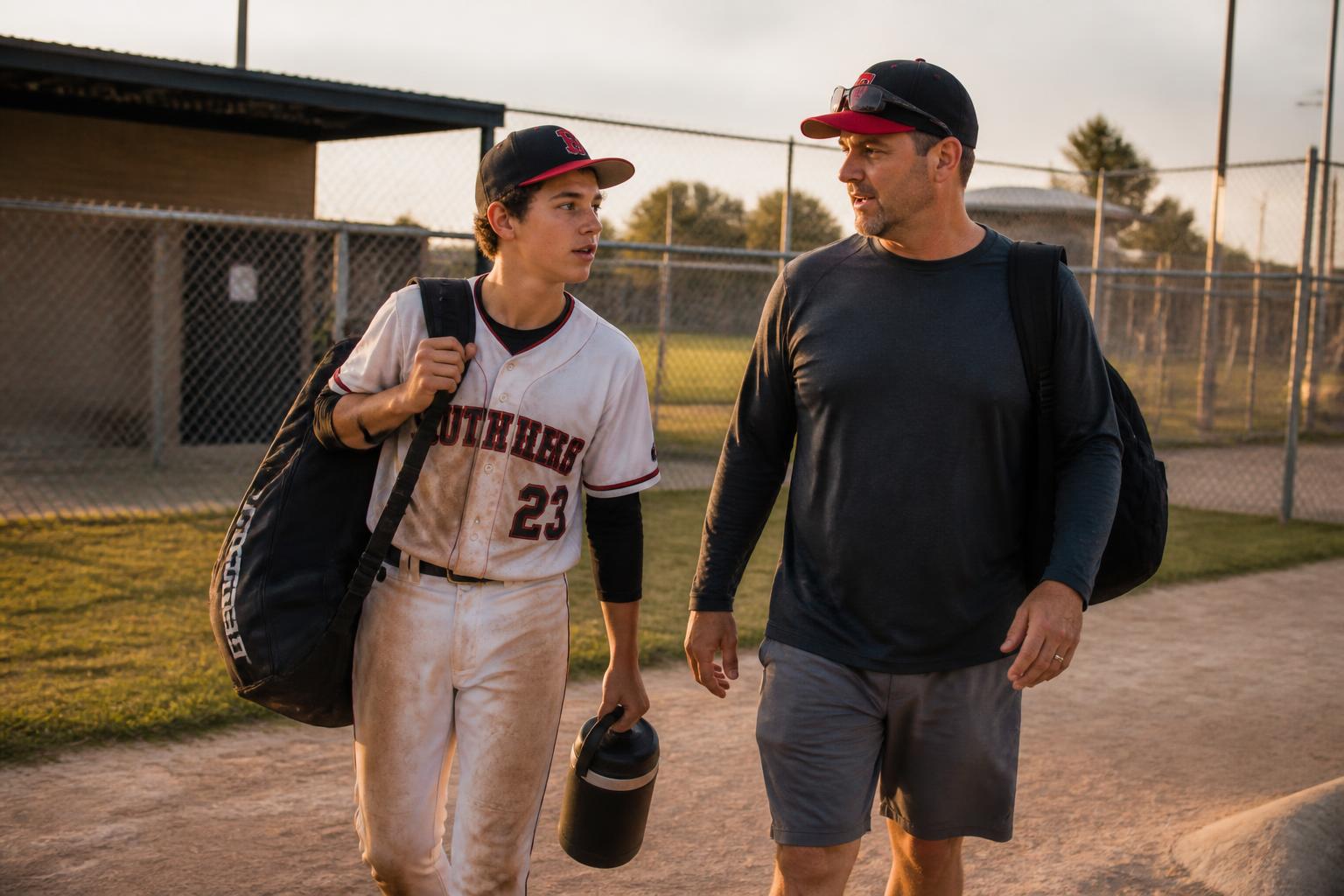
He said it on a Sunday morning in June. We were in the kitchen. He was eating cereal. I was getting ready to drive him to practice.
"Dad, I don't want to play anymore."
I remember the exact quality of the light in that kitchen. I remember the sound of the spoon against the bowl. I remember the way he said it — not dramatically, not with tears. Just flat. Tired. Like he had been carrying the sentence for a long time and had finally decided to put it down.
"What do you mean?" I said. Which was a stupid thing to say. He had been perfectly clear.
"I mean I don't want to play baseball anymore." He looked up at me. "I'm not having fun."
I sat down across from him. I did not say anything for a long moment. And in that silence, I started running through everything I had invested — the money, the time, the early mornings, the weekends away, the lessons, the tournaments. I started thinking about his talent, about the coaches who had told me he had real potential, about the trajectory I had imagined for him.
And then I stopped. Because I realized I was thinking about myself.
The Warning Signs I Had Missed
Looking back, the signs had been there for months. I just hadn't wanted to see them.
He had stopped talking about baseball on the drive to practice. He used to narrate everything — who he wanted to face, what pitch he was going to look for, what he was working on. That had gone quiet sometime in the spring.
He had started taking longer to get ready on game days. There was always something — a shoe he couldn't find, homework he had forgotten, a stomach that didn't feel right. I had chalked it up to normal kid stuff. It wasn't.
He had stopped celebrating after good plays. He used to pump his fist, run back to the dugout with energy. By June, he was playing with the flat affect of someone going through the motions.
Burnout in youth athletes rarely announces itself. It creeps in slowly — through withdrawal, through manufactured excuses, through a gradual dimming of the enthusiasm that used to be effortless. By the time a child says "I want to quit," they have usually been struggling for months.
I had seen all of it. I had explained it away.
What Was Actually Happening
When I finally sat down and really talked to my son — not about baseball, but about what he was feeling — what came out was not what I expected.
It wasn't that he didn't love baseball. He did. He still does.
It was that baseball had stopped being his. Somewhere along the way, it had become mine. My investment. My schedule. My expectations. My analysis of every at-bat. My vision for his future.
He was playing for me. And he was exhausted.
"I feel like I can never do anything right," he said. "Like no matter what I do, there's always something wrong with it."
That sentence has stayed with me for years. Because I knew exactly where it came from. It came from me.
"He was playing for me. And he was exhausted. Somewhere along the way, baseball had stopped being his."
The Pressure We Don't Know We're Creating
Here is the thing about parental pressure in youth sports: most of it is invisible. It doesn't come from yelling. It doesn't come from explicit demands. It comes from the way you react when they make an error. It comes from the questions you ask on the way home. It comes from the look on your face when they strike out.
Kids are extraordinarily sensitive to their parents' emotional state. They read us constantly. They know when we're disappointed even when we say we're not. They feel our tension in the stands even when we think we're being calm.
And when a child starts to believe that their parent's happiness is connected to their performance, something shifts. Baseball stops being a game and starts being a responsibility. Failure stops being part of the process and starts being a personal failing.
That is a weight no twelve-year-old should have to carry.
What We Did
We took three weeks off. No lessons. No practice. No baseball at all.
It was harder for me than it was for him.
When we came back, we made some agreements. I would not analyze games in the car. I would not offer unsolicited feedback. I would not bring up baseball unless he did first. My job at games was to watch and cheer — not to coach from the stands, not to take notes, not to have a debrief ready for the drive home.
His job was simple: have fun. That was the only metric that mattered.
It took about a month for him to start looking like himself again. The flat affect lifted. He started talking about baseball on the drive to practice. He started celebrating again.
He didn't quit. But it was close. And it would have been entirely my fault.
The Warning Signs to Watch For
If you are reading this and something is resonating, here are the signs I wish I had taken more seriously:
- Your child stops talking about baseball voluntarily.
- They manufacture excuses to avoid practice or games.
- Their enthusiasm for the game has visibly diminished.
- They seem relieved when games are rained out.
- They play without emotion — no celebration, no disappointment, just going through the motions.
- They say things like "I'm not good enough" or "I can never do anything right."
- They stop making eye contact when you talk about baseball.
None of these signs mean your child is going to quit. But they are all signals that something needs to change — and that the change probably needs to start with you, not with them.
The Question That Changes Everything
I now ask every parent I work with the same question: "Does your child play baseball for you or for themselves?"
Most parents say "for themselves." But when I ask follow-up questions — about what happens after a bad game, about how they react to errors, about what they talk about in the car — a different picture often emerges.
The goal is not to be a passive parent. The goal is to be a parent whose child knows, without any doubt, that your love for them has nothing to do with their batting average.
That is the foundation everything else is built on. And it is the thing that keeps kids in the game.
"The goal is not to be a passive parent. The goal is to be a parent whose child knows your love has nothing to do with their batting average."
Practical Takeaways
- Watch for the warning signs of burnout — they are subtle and easy to miss.
- If your child seems to be struggling, take a break before they ask for one.
- Make explicit agreements about your role at games and in the car.
- Ask your child: "Are you having fun?" And really listen to the answer.
- Separate your emotional state from their performance. They are watching you.
- Remember: the goal is a child who loves baseball at sixteen, not a child who peaks at twelve.
There Is Still Time
After years of playing professionally and working with thousands of baseball families, I have seen this story play out in every variation. The talented kid who burns out. The passionate player who loses the joy. The family that invested everything and ended up with a child who never wants to see a baseball again.
I have also seen the other version. The family that caught it in time. The parent who made the changes. The kid who came back to the game with a new relationship to it — one built on love instead of obligation.
That second version is always possible. But it requires giving your child the mental tools to handle the pressure that youth sports inevitably creates.
That is what Bulletproof Hitter through Baseball Notes is designed to do. It gives kids a daily framework for processing failure, managing pressure, and reconnecting with the reasons they started playing in the first place. It gives parents a language for talking about the mental game in a way that builds their child up instead of adding to the weight they are already carrying.
My son still plays. He loves the game. And I am grateful every single day that he said what he said in that kitchen — because it forced me to become the parent he needed.
You can do the same. You just have to be willing to listen.